Why Do LED Screens Catch Fire?
LED displays have become an essential part of retail stores, shopping malls, exhibitions, airports, museums, and commercial buildings. As displays become thinner, lighter, and more transparent, many businesses focus on image quality while overlooking an equally important factor—electrical safety.
Although modern LED displays are generally reliable, fire incidents still occur around the world. Most are not caused by the LEDs themselves but by poor electrical design, low-quality materials, overheating, or improper installation.
For transparent LED displays—especially ultra-thin led panels—the challenge is even greater. Limited space leaves less room for heat dissipation and electrical protection, making engineering quality more critical than ever.
The Most Common Causes Of LED Display Fires: 5 Hidden Risks
1. Electrical Failures: The Leading Cause of LED Display Fires
The majority of LED display fires originate from electrical failures. Common issues include:
- Aging or damaged wiring
- Undersized power cables
- Loose electrical connections
- Low-quality power supplies
- PCB short circuits
Overloaded electrical systems
When electrical current exceeds the designed capacity, excessive heat builds up rapidly. If nearby components are combustible, ignition becomes possible.
Unfortunately, some low-cost LED displays use inferior power supplies without adequate over-voltage or over-current protection. A sudden voltage spike can damage ICs, overheat components, and create dangerous conditions.
What to look for
- Certified power supplies
- High-quality copper wiring
- Proper circuit isolation
- Reliable overload protection
2. Poor Heat Dissipation Causes Dangerous Overheating
Every LED module generates heat during operation. Without proper ventilation, internal temperatures continue rising, accelerating the aging of:
- LEDs drivers
- Power supplies
- PCB
- Connectors
- Signal cables
Dust accumulation inside cooling fans further restricts airflow, increasing the risk of component failure.
Outdoor LED displays are particularly vulnerable because they must withstand:
- Direct sunlight
- High ambient temperatures
- Continuous operation
- Rain and humidity
Professional LED display manufacturers design dedicated airflow channels and recommend sufficient cooling systems, including ventilation fans or air conditioning for large installations.
3. Low-Quality Materials Increase Fire Risks
Not all LED displays are manufactured to the same standards. Some manufacturers reduce costs by using:
- Copper-clad aluminum cables
- Non-flame-retardant plastics
- Inferior PCB materials
- Poor-quality connectors
- Low-grade insulation
These materials deteriorate much faster under heat.
In transparent LED screens, where structural components are minimized to maximize transparency, every material plays a more critical role in electrical safety. High-quality LED displays should use:
- Pure copper cables
- Flame-retardant engineering plastics
- Certified PCB materials
- Waterproof sealing
- UV-resistant components
4. Water Ingress Can Lead to Short Circuits
Outdoor LED displays constantly face rain, humidity, and condensation. If waterproof sealing deteriorates, moisture can enter the cabinet and create electrical short circuits. This is particularly dangerous in aging displays where insulation has already weakened. Professional waterproof design includes:
- Reliable sealing materials
- IP-rated protection
- Moisture-resistant PCB coating
- Durable structural materials
Regular inspection is equally important to prevent hidden failures.
5. Improper Installation and Poor Maintenance
Even the highest-quality LED display can become unsafe if installed incorrectly.
Typical installation mistakes include:
- Loose power terminals
- Incorrect cable routing
- Overloaded distribution boxes
- Inadequate ventilation
- Improper grounding
Lack of routine maintenance can also allow dust, corrosion, and electrical degradation to accumulate unnoticed. For commercial LED displays operating 12–24 hours per day, periodic inspection should always be part of the maintenance plan.
Are Transparent LED Displays More Prone to Catching Fire?
Transparent LED displays are becoming increasingly popular for retail storefronts, shopping malls, automotive showrooms, museums, and exhibitions. Their lightweight construction and ultra-high transparency create impressive visual experiences—but they also introduce unique engineering challenges.
Compared with traditional LED cabinets, transparent displays typically feature:
- slimmer structures
- exposed circuitry
- reduced installation space
- higher power density
- greater demand for efficient thermal management
Without robust electrical protection, these characteristics can increase the consequences of electrical faults. This is why engineering quality—not just transparency or pixel pitch—should be a primary consideration when selecting a transparent LED display.
How InVisia Eliminates Fire Risks with Advanced Circuit Protection
At InVisia Displays, safety is engineered into every holographic transparent LED screen. InVisia integrates circuit protection directly into the display system.
Our proprietary protection architecture continuously safeguards against:
- Short circuits
- Over-current conditions
- Voltage fluctuations
- Localized overheating
- Electrical component failure
Even if an individual LED panels experiences an electrical fault, the protection system isolates the affected circuit before heat can spread to surrounding components. The result is a display designed to never ignite due to an internal electrical fault. Beyond circuit protection, every InVisia holographic transparent LED screen is built using:
- High-quality flame-retardant materials
- Premium power components
- Pure copper wiring
- 4-layer PCB with 2oz copper thickness
- Strict quality control throughout production
Combined with excellent thermal management, these features deliver a transparent LED solution that is not only visually stunning but also exceptionally reliable.
InVisia Does Not Recommend Installing Transparent LED Screens Directly on Glass for Semi-Outdoor Applications
Many clients tend to choose direct glass installation because it looks almost invisible. From a purely visual standpoint, it is impressive. However, as a professional holographic transparent LED screen manufacturer, InVisia prioritizes long-term safety and reliability over appearance alone. For semi-outdoor environments—such as storefronts exposed to sunlight, covered entrances, transportation hubs, and shopping malls with strong solar gain—we generally do not recommend attaching transparent LED screens directly to the glass.
Instead, we recommend our Stand-Off Mounting (Distance from Glass) solution>>.
- Excellent airflow
- Reduced fire risk
- Easier maintenance and servicing
- Minimal visual impact
Because InVisia holographic LED screens feature extremely high transparency, the small installation gap is virtually invisible from normal viewing distances. The result delivers nearly the same floating holographic effect while significantly improving long-term safety and reliability. Learn case details>>
Best Practices to Prevent LED Display Fires
Whether you’re purchasing a new LED display or maintaining an existing installation, following these best practices can greatly improve safety:
- Choose certified power supplies and electrical components.
- Use flame-retardant materials and pure copper wiring.
- Ensure adequate ventilation and cooling.
- Keep displays clean to prevent dust buildup.
- Schedule regular electrical inspections.
- Hire qualified professionals for installation.
- Replace aging components before failures occur.
Investing in quality from the beginning is far less expensive than dealing with equipment damage, business interruption, or fire-related losses.
Safety Should Be Your First Consideration
Brightness, transparency, and image quality are important—but safety is non-negotiable. As transparent LED technology becomes thinner and more sophisticated, selecting a manufacturer with proven engineering expertise is more important than ever.
At InVisia Displays, we believe an outstanding holographic transparent LED display should do more than create breathtaking visual experiences. It should also provide long-term reliability, intelligent electrical protection, and peace of mind. The safest LED display is the one that never becomes a fire hazard.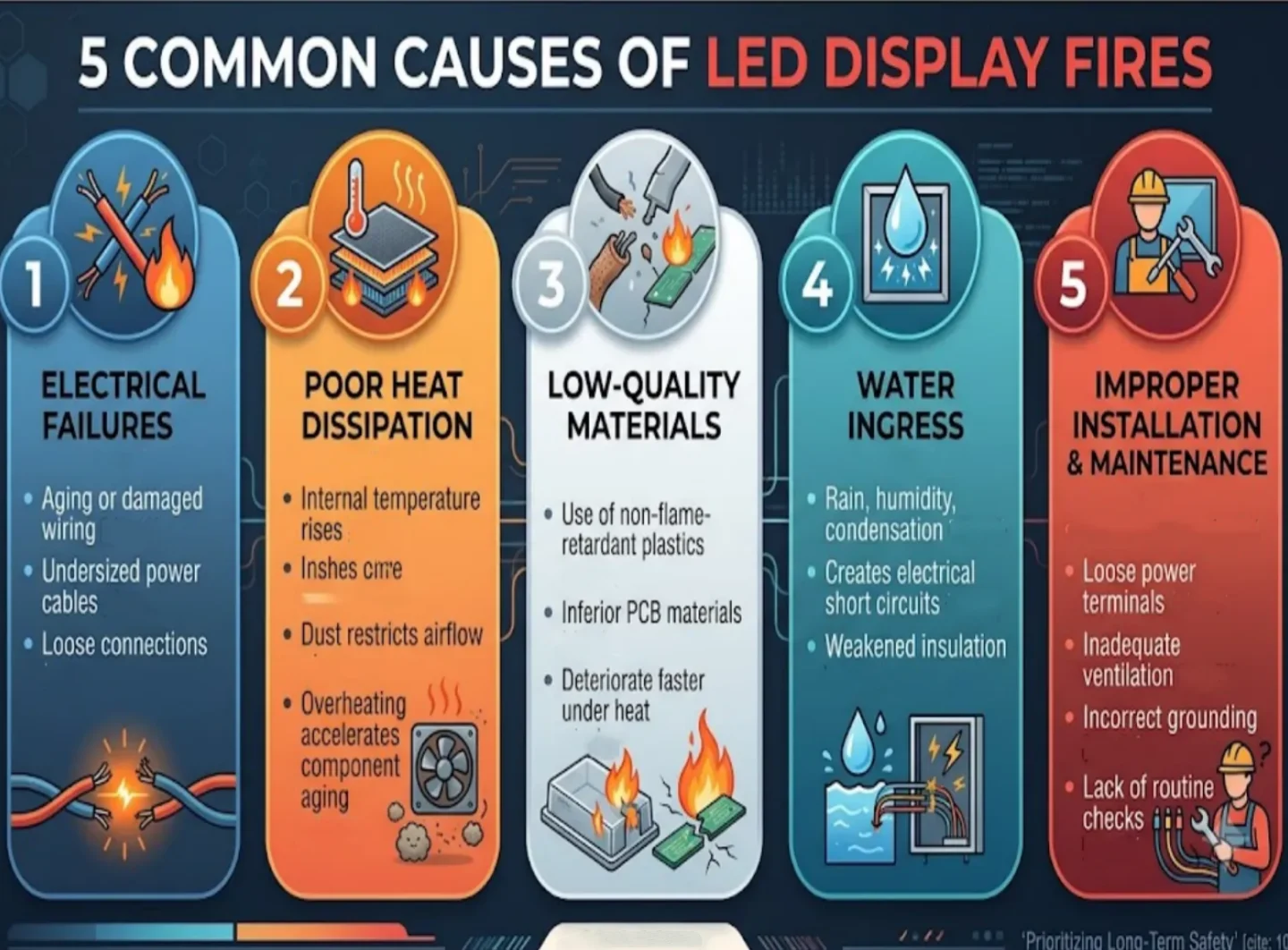

 5th Floor, Building 9, Hengchangrong High-Tech Industrial Park, Bao'an District, Shenzhen 518128, China