
Three Glass-Mounting Methods for Holographic LED Displays
Holographic LED displays (also known as transparent or mesh LED displays) are increasingly used for retail storefronts, shopping malls, airports, and architectural glass facades.
Do you know how many methods there are to mount holographic LED screens onto glass? And the installation method on glass is a critical factor that directly affects visual performance, structural safety, long-term reliability, and maintenance.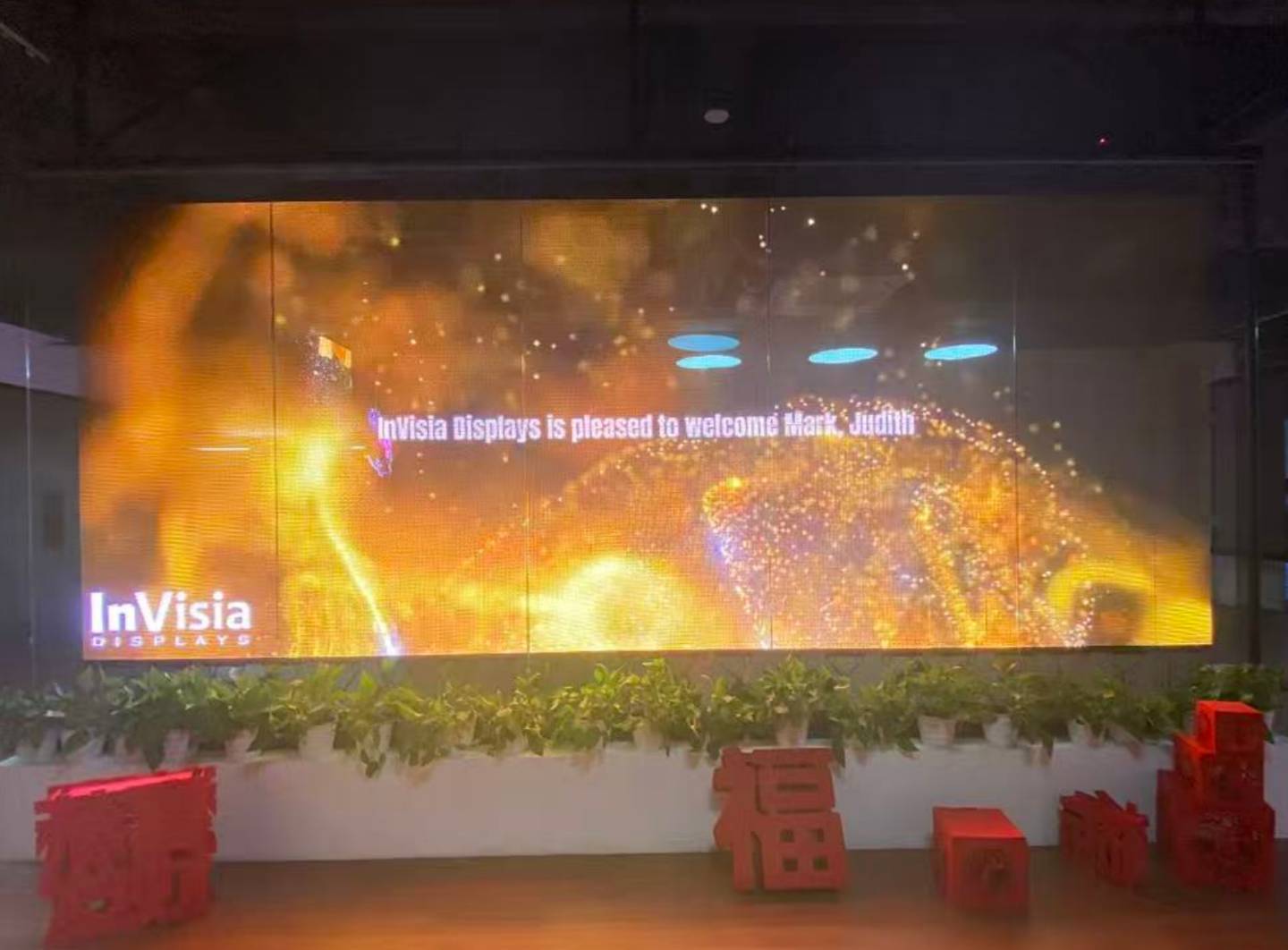
In practice, there are three mainstream glass-mounting methods for holographic LED displays:
- LED-side direct glass mounting
- PCB-side direct glass mounting
- Stand-Off Mounting (Distance from Glass)
Below is a detailed comparison to help system integrators and project owners choose the right solution.
1. LED-Side Direct Glass Mounting
(LED face attached directly to the glass)
In this method, the LED emitting surface faces and is bonded directly onto the glass, typically using optical adhesive or UV glue.
Advantages
- Reduction the failure of LEDs caused by impact
Limitations
The LED lamps are directly exposed to the glass, increasing the risk of:
- Heat accumulation
- Light reflection and glare
- Difficult to rework or replace modules once bonded
- Higher risk of LED damage during installation or removal
2. PCB-Side Direct Glass Mounting
(PCB side attached to the glass, LEDs facing outward)
This approach bonds the PCB side of the LED panel directly to the glass, leaving the LEDs exposed to air.
Advantages
- Easier to maintain when LEDs failure compared to LED-side bonding
- Reduced light reflection from the glass surface
Limitations
- Potential for Malfunction: LEDs may be more vulnerable to impact damage.
- Limited Maintenance Flexibility: Still presents some challenges for module maintenance and replacement.
3. Stand-Off Mounting (Distance from Glass)
(LED panel mounted with a controlled distance from the glass)
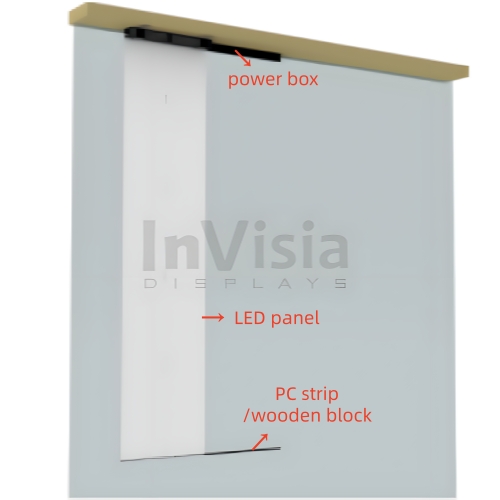
In semi-outdoor conditions, direct sunlight increases both temperature and brightness requirements, making the above two mounting methods less viable. Stand-off mounting involves creating a gap between the LED panel and the glass surface using PC (polycarbonate) strips or wood blocks. This method is ideal for environments exposed to harsh sunlight and fluctuating temperatures.
The LED panels are mechanically fixed to the PC strips using embedded nuts and screws, while the PC strips themselves are securely bonded to the glass with UV glue.
 Key Advantages
- Optimized Optical Performance
- Reduced glass reflection and moiré effects
- More uniform brightness and clearer holographic visuals
- Enhanced Structural Safety
- Mechanical fixation instead of full adhesive dependence
- Better thermal expansion
- Suitable for large-area and long-term installations
- Superior Heat Dissipation
- Air gap allows natural airflow
- Lower operating temperature for LEDs and driver ICs
- Extended lifespan of both LED modules and power components
- Easier Maintenance & Scalability
- Modular LED panels can be replaced easily
- Ideal for large-width glass walls and high installations
Installation Workflow (PC-strip Method)
Based on the provided installation guide, the process includes:
- Glass surface cleaning and laser positioning
- Bonding PC strips to the glass using UV glue
- Curing with an industrial-grade UV lamp
- Mechanical fixing of LED panels onto PC strips
- Sequential installation of power boxes
- Final cable connection and panel alignment
This hybrid bonding and mechanical structure ensures long-term stability without compromising glass integrity. Learn about project cases that adopt this installation method >>
Which Glass-Mounting Method Should You Choose?
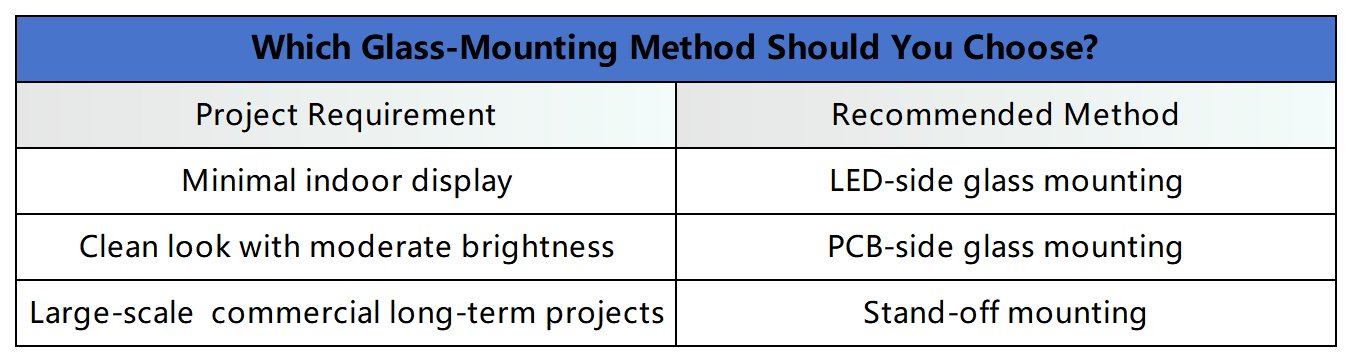
The choice of mounting method depends on several factors, such as environmental conditions, and maintenance needs. If you prioritize reduction the failure of LEDs caused by impact, LED-side direct glass mounting may be the ideal option. For reducing light reflection from the glass surface, PCB-side direct glass mounting offers an excellent balance. However, if you require a solution for large-scale, high-brightness installations in semi-outdoor conditions, stand-off mounting is the most optimal choice, providing superior optical performance, heat dissipation, and long-term durability.
Conclusion
At InVisia, we understand the importance of our designs to meet our clients’ needs. Our team consistently approaches each project with a customer-centric mindset, ensuring that every solution we offer is optimized for performance, reliability, and ease of maintenance. Whether it’s a retail display or a large-scale architectural installation, we work closely with clients to deliver a seamless, high-quality visual experience.

 5th Floor, Building 9, Hengchangrong High-Tech Industrial Park, Bao'an District, Shenzhen 518128, China


