
What Is the Difference Between Transparent LED Screen and Photoelectric Glass LED?
What is Transparent LED Screen?
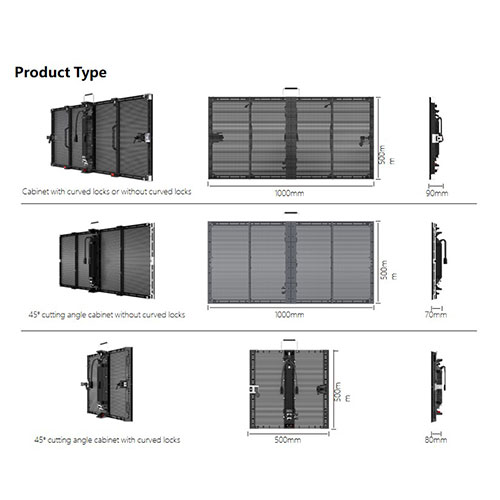
Transparent LED screens utilize advanced LED manufacturing technology to minimize structural obstructions, maximize see-through clarity, and deliver a unique visual experience. When viewed from an ideal distance, images appear to float in mid-air.
With a light transmittance ranging from 70% to 95%, these LED panels can be seamlessly installed against glass or custom-designed to fit various on-site environments, enabling versatile and creative special-shaped displays.
What is Photoelectric Glass LED?
Photoelectric glass LED uses LED chips built in between double layers of glass, using glass conductive coating technology and a control system to present photoelectric display effects. Photoelectric glass LED can not only achieve the mechanical strength and high transparency of building curtain walls, but also realize the function of LED media playback.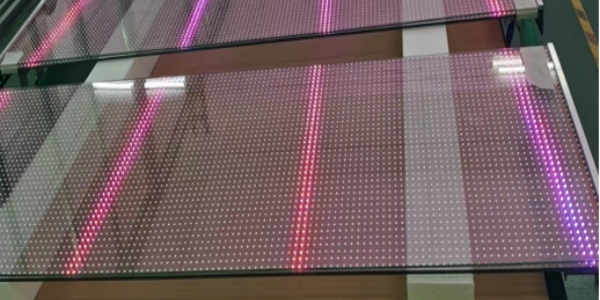
Advantages of Glass LED
- Energy saving and environmental protection. It has the mechanical strength, heat insulation, explosion-proof, UV protection, etc. of architectural laminated glass. And there is no waste water, waste gas, or waste emissions during the production process.
- Media communication. The media attributes of LED photoelectric glass products can help owners and merchants promote their brands, display celebration activities, enhance cultural media attributes, and enhance audience interaction and participation.
- Landscape unity. Creative videos can be designed according to the architectural style to form an overall style between the building itself and the surrounding landscape, expressing the artistry of the building itself and the culture of the overall building complex, thereby achieving the perfect integration of architectural technology and humanities.
Key Differences Between Transparent LED Screen and Photoelectric Glass LED
- Different structures
The transparent LED screen uses SMD chip packaging technology to stick the lamp in the groove of the PCB. Waterproof and dustproof, the aluminum frame makes the entire screen lightweight and easy to maintain. The module size is 1m×1m, which is suitable for application scenarios that cannot meet the high requirements for size selection.
Photoelectric glass LED is a high-grade customized glass that uses transparent conductive technology to fix the light-emitting diode structural layer between two layers of glass. It can be customized different shapes—including circular, square, and other custom geometries—seamlessly integrating with architectural design for sophisticated visual applications.
- Installation operation
Transparent LED screens offer broad compatibility and can be installed on most building structures. They support various mounting methods, including hanging and surface attachment, and can even be configured as single standalone strips.
In contrast, LED glass displays require building design integration, with screen locations and glass frames planned in advance. Alternatively, they can be attached to existing glass surfaces. However, LED glass installations are generally more complex and challenging to maintain.
- Product weight
The transparent LED screen product is light and clear, the PCB thickness is only 1-4mm, and the screen weight is 12kg/㎡.
Photoelectric glass LED products have luminous glass, and the weight of the glass itself is 20kg/㎡.
- Maintenance
Transparent LED screens are easy and fast to maintain, saving manpower, material and financial resources.
Photoelectric glass LED is almost impossible to maintain. It requires dismantling the existing building structure and replacing the entire glass screen, which is costly to maintain.
 https://invisiadisplays.com/wp-content/uploads/2026/03/LED-China-ISLE-2026-1.jpg
1062
1440
administrator
https://invisiadisplays.com/wp-content/uploads/2025/04/logo22-1.png
administrator2026-03-02 01:21:352026-03-02 02:09:21InVisia at LED China & ISLE 2026
https://invisiadisplays.com/wp-content/uploads/2026/03/LED-China-ISLE-2026-1.jpg
1062
1440
administrator
https://invisiadisplays.com/wp-content/uploads/2025/04/logo22-1.png
administrator2026-03-02 01:21:352026-03-02 02:09:21InVisia at LED China & ISLE 2026 https://invisiadisplays.com/wp-content/uploads/2026/01/InVisia-Holographic-Displays-CE-FCC-ETL.jpg
1062
1440
administrator
https://invisiadisplays.com/wp-content/uploads/2025/04/logo22-1.png
administrator2026-02-20 12:48:472026-02-06 06:50:58A Complete Guide to InVisia Holographic Screen
https://invisiadisplays.com/wp-content/uploads/2026/01/InVisia-Holographic-Displays-CE-FCC-ETL.jpg
1062
1440
administrator
https://invisiadisplays.com/wp-content/uploads/2025/04/logo22-1.png
administrator2026-02-20 12:48:472026-02-06 06:50:58A Complete Guide to InVisia Holographic Screen https://invisiadisplays.com/wp-content/uploads/2026/02/InVisia-showroom-mesh-LED-screen-upgrade.webp
1062
1440
administrator
https://invisiadisplays.com/wp-content/uploads/2025/04/logo22-1.png
administrator2026-02-13 14:47:012026-02-06 03:39:39InVisia Showroom Upgrades Holographic LED Display
https://invisiadisplays.com/wp-content/uploads/2026/02/InVisia-showroom-mesh-LED-screen-upgrade.webp
1062
1440
administrator
https://invisiadisplays.com/wp-content/uploads/2025/04/logo22-1.png
administrator2026-02-13 14:47:012026-02-06 03:39:39InVisia Showroom Upgrades Holographic LED Display https://invisiadisplays.com/wp-content/uploads/2026/02/InVisia-at-ISE-2026.webp
1062
1440
administrator
https://invisiadisplays.com/wp-content/uploads/2025/04/logo22-1.png
administrator2026-02-05 03:00:152026-02-05 03:27:10InVisia Live at ISE 2026: Strong Interest in Holographic LED Banners
https://invisiadisplays.com/wp-content/uploads/2026/02/InVisia-at-ISE-2026.webp
1062
1440
administrator
https://invisiadisplays.com/wp-content/uploads/2025/04/logo22-1.png
administrator2026-02-05 03:00:152026-02-05 03:27:10InVisia Live at ISE 2026: Strong Interest in Holographic LED Banners https://invisiadisplays.com/wp-content/uploads/2026/01/InVisia-ETL-certified-mesh-LED-display.webp
1062
1440
administrator
https://invisiadisplays.com/wp-content/uploads/2025/04/logo22-1.png
administrator2026-01-29 08:41:522026-01-30 06:48:26InVisia Holographic LED Displays Achieve ETL Certification
https://invisiadisplays.com/wp-content/uploads/2026/01/InVisia-ETL-certified-mesh-LED-display.webp
1062
1440
administrator
https://invisiadisplays.com/wp-content/uploads/2025/04/logo22-1.png
administrator2026-01-29 08:41:522026-01-30 06:48:26InVisia Holographic LED Displays Achieve ETL Certification https://invisiadisplays.com/wp-content/uploads/2026/01/InVisia-Displays-ISE-2026.jpg
1062
1440
administrator
https://invisiadisplays.com/wp-content/uploads/2025/04/logo22-1.png
administrator2026-01-23 06:19:282026-01-23 06:42:02InVisia Displays to Exhibit at ISE Barcelona 2026
https://invisiadisplays.com/wp-content/uploads/2026/01/InVisia-Displays-ISE-2026.jpg
1062
1440
administrator
https://invisiadisplays.com/wp-content/uploads/2025/04/logo22-1.png
administrator2026-01-23 06:19:282026-01-23 06:42:02InVisia Displays to Exhibit at ISE Barcelona 2026 https://invisiadisplays.com/wp-content/uploads/2026/01/InVisia-holographic-LED-rental-displays.jpg
1062
1440
administrator
https://invisiadisplays.com/wp-content/uploads/2025/04/logo22-1.png
administrator2026-01-22 03:33:242026-01-22 07:01:55InVisia New-Generation Holographic Rental LED Display
https://invisiadisplays.com/wp-content/uploads/2026/01/InVisia-holographic-LED-rental-displays.jpg
1062
1440
administrator
https://invisiadisplays.com/wp-content/uploads/2025/04/logo22-1.png
administrator2026-01-22 03:33:242026-01-22 07:01:55InVisia New-Generation Holographic Rental LED Display https://invisiadisplays.com/wp-content/uploads/2026/01/LED-Screen-Flickering.jpg
1062
1440
administrator
https://invisiadisplays.com/wp-content/uploads/2025/04/logo22-1.png
administrator2026-01-14 06:29:442026-01-19 01:56:55LED Screen Flickering: Causes and Troubleshooting
https://invisiadisplays.com/wp-content/uploads/2026/01/LED-Screen-Flickering.jpg
1062
1440
administrator
https://invisiadisplays.com/wp-content/uploads/2025/04/logo22-1.png
administrator2026-01-14 06:29:442026-01-19 01:56:55LED Screen Flickering: Causes and Troubleshooting https://invisiadisplays.com/wp-content/uploads/2026/01/holographic-LED-screens-glass-mount.jpg
1062
1440
administrator
https://invisiadisplays.com/wp-content/uploads/2025/04/logo22-1.png
administrator2026-01-09 10:26:392026-01-09 10:28:13Three Glass-Mounting Methods for Holographic LED Displays
https://invisiadisplays.com/wp-content/uploads/2026/01/holographic-LED-screens-glass-mount.jpg
1062
1440
administrator
https://invisiadisplays.com/wp-content/uploads/2025/04/logo22-1.png
administrator2026-01-09 10:26:392026-01-09 10:28:13Three Glass-Mounting Methods for Holographic LED Displays
 5th Floor, Building 9, Hengchangrong High-Tech Industrial Park, Bao'an District, Shenzhen 518128, China

