Conventional vs. Holographic LED Displays
In the past, businesses might have used film or photo prints on their windows, but these couldn’t be changed frequently, and labor costs were high for areas spanning hundreds of square meters. This led people to seek out digital displays. While conventional LED displays remain widely used, holographic transparent LED screens are emerging as a next-generation alternative—especially for retail, architecture, and high-end visual installations.
This article provides a detailed comparison to help you understand the key differences and advantages of each solution.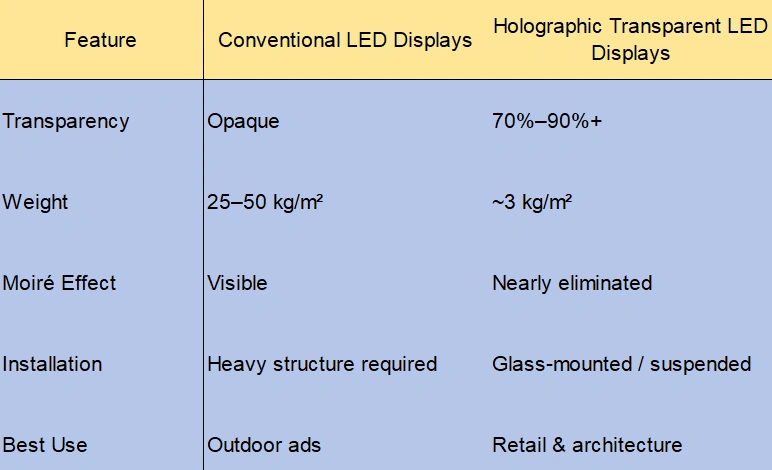
1. Display Technology & Visual Performance
Conventional LED Displays
Traditional LED displays use dense pixel arrangements and dynamic scanning (dynamic refresh) to produce bright and vivid visuals. While they deliver strong brightness and color performance, they are prone to moire patterns, especially when filmed or viewed through cameras, due to interference between pixel grids and camera sensors.
Holographic Transparent LED Screens
Holographic LED screens adopt static refresh technology, eliminating scan-line interference and significantly reducing or even eliminating moire effects. This ensures clean visuals on camera, making them ideal for live events and social media exposure.
Additionally, holographic displays create a floating, naked-eye 3D visual effect, enhancing viewer engagement without the need for special glasses.
2. Transparency & Aesthetic Integration
Conventional LED Displays
Standard LED screens are opaque, blocking natural light and often requiring dedicated mounting structures. This can disrupt architectural design and reduce indoor lighting efficiency.
Holographic Transparent LED Screens
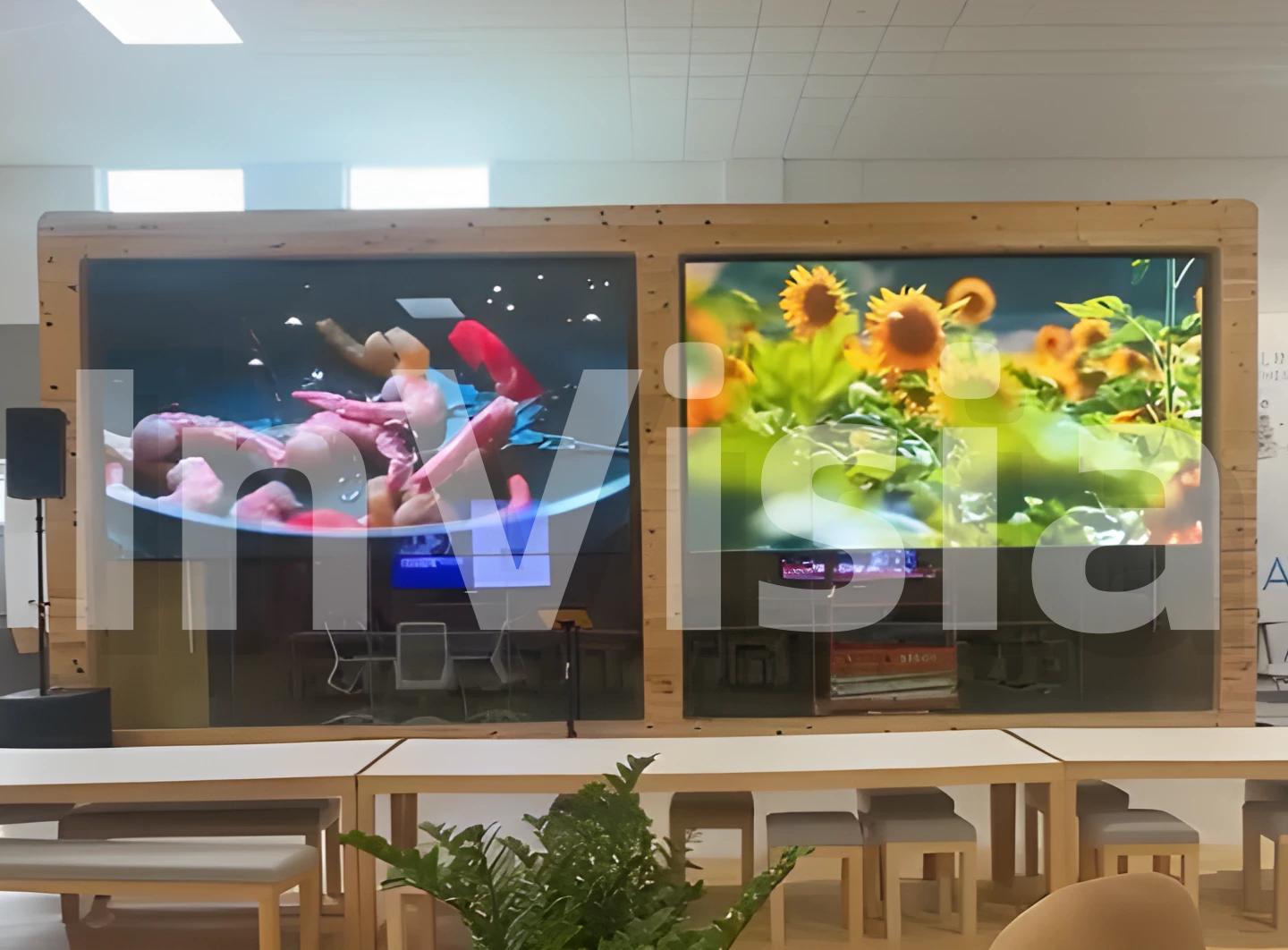
One of the most significant advantages is their ultra-high transparency, typically ranging from 70% to over 90%. This allows:
- Natural light to pass through freely
- Minimal obstruction of interior or exterior views
- Seamless integration with glass facades and storefronts (Contact InVisia to learn how to apply holographic transparent LED displays to your project.)
As a result, holographic screens are widely used in retail windows, shopping malls, exhibitions, and glass curtain walls.
3. Installation & Structural Impact
Conventional LED Displays
- Require heavy steel structures
- Typical weight ranges from 25–50 kg/m² or more
- Higher load-bearing requirements
- Complex installation and maintenance
- Due to their substantial weight, conventional LED displays often demand reinforced structures, which can limit installation flexibility—especially in glass curtain walls or retail environments.
Holographic Transparent LED Screens
- Lightweight and modular design
- Typical weight as low as 2 kg/m², significantly lighter than conventional LED displays
- Can be directly mounted on glass surfaces or suspended
- Minimal structural modification required
This significantly reduces installation time and overall project costs.
4. Commercial Value Comparison
Key Business Advantages of Holographic LED Displays:
- Stronger street attraction with futuristic, eye-catching visuals
- +22% increase in foot traffic by maintaining storefront visibility
- 5–10x organic social media exposure (UGC)
- Premium brand perception: high-end, innovative, tech-driven
In contrast, conventional LED displays often:
- Block store interiors
- Reduce walk-in rates
- Deliver limited social sharing value
5. ROI & Cost Efficiency Analysis
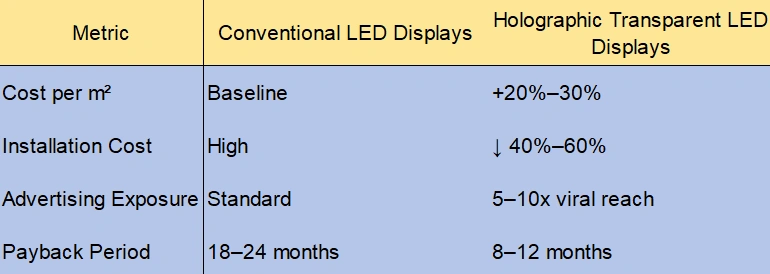
Although holographic LED screens may have a slightly higher upfront cost, they deliver significantly better long-term returns:
6. Application Scenarios
Conventional LED Displays
Best suited for:
- Outdoor advertising billboards
- High-brightness environments
Holographic Transparent LED Screens
Ideal for:
- Indoor and semi-outdoor creative installations (The brightness of InVisia holographic LED displays can reach 7000nits, and their visibility will not be affected even in strong sunlight.)
Their ability to combine digital content with physical space makes them particularly attractive for immersive marketing.
Conclusion: Which One Should You Choose?
Choosing between a conventional LED display and a holographic transparent LED screen depends on your project goals:
If you prioritize maximum brightness and large-scale outdoor visibility, conventional LED displays remain a reliable choice.
If you value aesthetics, transparency, camera-friendly visuals, and stronger marketing ROI & engagement, holographic transparent LED screens offer a clear competitive advantage.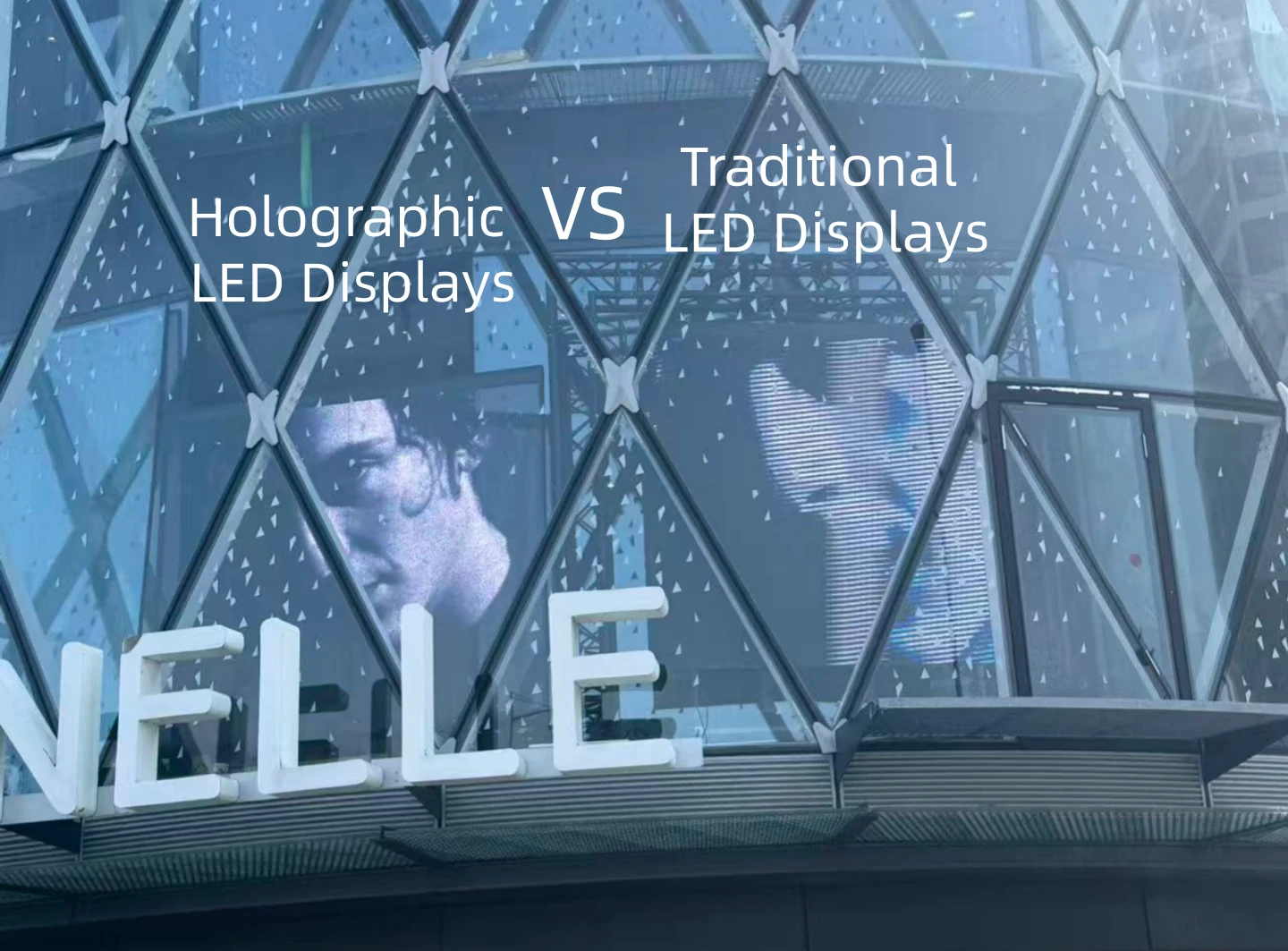

 5th Floor, Building 9, Hengchangrong High-Tech Industrial Park, Bao'an District, Shenzhen 518128, China