Can Transparent LED Mesh Panels Be Cut? Customization Guide
When planning a transparent LED display installation, one common question customers ask is whether transparent LED mesh panels can be cut to fit specific dimensions.
For example, if your project requires a LED mesh display with a non-standard width or height, can you simply cut the panels to the required size?
The answer is: Yes, transparent LED mesh panels can be customized in length, but width customization works differently. Understanding the panel structure and cutting limitations is essential before making any modifications.
In this article, we explain what can and cannot be cut, how factory customization works, and what you should know before attempting to cut LED mesh panels yourself.
Can Transparent LED Mesh Panels Be Cut?
Yes, InVisia’s current transparent LED mesh screen series supports length customization through cutting.
However, there is an important distinction between length and width.
Length: Customizable by Cutting
The length of our transparent LED mesh panels can be adjusted to meet different project requirements.
Instead of forcing customers to use standard panel lengths, we can cut the panels to the required dimensions at our factory.
This makes it easier to accommodate different glass sizes, architectural structures, retail windows, and other customized installation environments.
Width: Cannot Be Adjusted by Simply Cutting
Unlike length, the width of our standard LED mesh panels cannot be reduced through cutting.
Our standard module width is 250 mm.
If your project requires a narrower panel, a new module design must be developed to achieve the required width. This is a customized manufacturing process rather than a simple cutting operation.
In other words:
- Length: Can be customized by factory cutting.
- Width: Cannot be changed by cutting the existing module. A redesigned module is required for non-standard widths.
This distinction is particularly important when planning a large-scale transparent LED display project.
Why Do We Recommend Factory Cutting Instead of DIY Cutting?
You may have seen videos on social media showing people cutting LED mesh panels with scissors or paper cutter(guillotine).
While it is technically possible to cut certain module structures manually, this does not mean it is a recommended practice.
Transparent LED mesh panels contain delicate electronic circuits. Improper cutting can cause several problems:
1. Damage to PCB circuits
The cutting process may damage internal copper traces or nearby electronic connections, resulting in dead pixels, circuit failures, or malfunctioning sections.
2. Risk of short circuits
After cutting, the exposed PCB edge must be properly treated and insulated. If the cut surface is left unprotected, exposed conductive layers may come into contact with each other, potentially causing a short circuit.
3. Unstable long-term performance
Even if a manually cut panel works initially, poorly finished edges or damaged circuit layers may create reliability problems during long-term operation.
For these reasons, we strongly recommend having LED mesh panels cut and processed at the factory before shipment.
Our factory can use professional cutting equipment to achieve a cleaner cutting edge and apply the necessary insulation treatment before the panels are delivered.
If you need to change the panel length after delivery, returning the panels to the factory for professional processing is also the preferred solution.
What If You Need to Cut LED Mesh Panels Yourself?
In some situations, returning the panels to the factory may not be practical. If you have no alternative but to perform the cutting yourself, the work should only be carried out by a qualified technician familiar with PCB structures and electronic components.
The following tools may be required:
- Paper cutter(guillotine) or scissors suitable for PCB cutting
- Utility knife
- Digital multimeter
- Microscope
- PCB insulating ink
Basic Cutting and Inspection Process
Step 1: Cut the PCB
Use an appropriate cutting tool to cut the PCB.
Step 2: Remove Burrs
After cutting, carefully use a utility knife to remove burrs and rough edges. Avoid scratching or damaging the remaining PCB layers.
Step 3: Inspect the Cutting Edge
Use a microscope to inspect the PCB layers and ensure that the cutting edge is clean, with no remaining burrs, loose copper, or unwanted conductive material.
Step 4: Check for Short Circuits
Use a multimeter to check the relevant electrical connections and verify that no short circuits have been introduced by the cutting process.
Step 5: Apply Insulating Ink
Once the electrical inspection is complete and no short circuit is detected, apply PCB insulating ink to the exposed cutting surface to protect the conductive layers.
Allow the insulating coating to cure according to the manufacturer’s instructions before proceeding with further testing or operation.
Important: This is a general description of the cutting and inspection process, not a recommendation for customers to modify their panels independently. The exact cutting position and electrical inspection requirements depend on the specific PCB design. Improper handling may permanently damage the product and affect its warranty coverage. Always consult the manufacturer before attempting any modification.
Can You Purchase Individual LED Mesh Panels Without a Complete Display System?
Yes, if your project only requires the LED mesh panels, you can discuss purchasing the panels individually rather than ordering a complete LED display system.
This can be useful for:
- Customers who already have compatible LED controllers and control systems.
- AV rental companies that need replacement panels or additional display modules.
- Integrators who want to incorporate transparent LED mesh into their own display structures.
- Projects requiring customized panel dimensions for specific architectural installations.
However, please note that individual panel compatibility depends on the existing control system, receiving cards, power configuration, and panel specifications.
When requesting a quotation, it is helpful to provide your required pixel pitch, panel dimensions, quantity, and details of your existing control system.
Minimum order quantities and customization requirements should be confirmed according to the specific product configuration.
What Information Should You Provide for a Customized LED Mesh Panel?
To help us recommend the right solution, we suggest preparing the following information:
- Pixel pitch: For example, P2.9, P3.9, or another specification.
- Required panel length: The exact length you need.
- Required panel width: Whether the standard 250 mm module width is suitable or a redesigned module is required.
- Quantity: The total number of individual panels required.
- Application: Retail windows, glass façades, exhibitions, stage backgrounds, or other installations.
- Control system: Whether you already have compatible power supplies, receiving cards, and controllers.
With this information, our engineering team can evaluate the feasibility of the customization and provide a suitable proposal.
Conclusion
Transparent LED mesh panels offer flexibility for customized transparent display installations, but not every dimension can be adjusted through simple cutting.
For InVisia’s current transparent LED mesh series:
- Panel length can be customized through factory cutting.
- Standard module width is 250 mm.
- Wider or narrower panels require a new module design rather than cutting the existing board.
- Factory cutting and insulation treatment are strongly recommended to avoid circuit damage and short circuits.
- Individual LED mesh panels can be discussed for projects that do not require a complete display system.
At InVisia Displays, we understand that every installation has different dimensional requirements. Whether you need standard LED mesh panels, customized lengths, or a specially designed module width, our team can help evaluate the right solution for your project.
Have a specific panel size in mind?
Contact InVisia Displays with your required dimensions and project details. Our team will help you determine the most suitable customization option.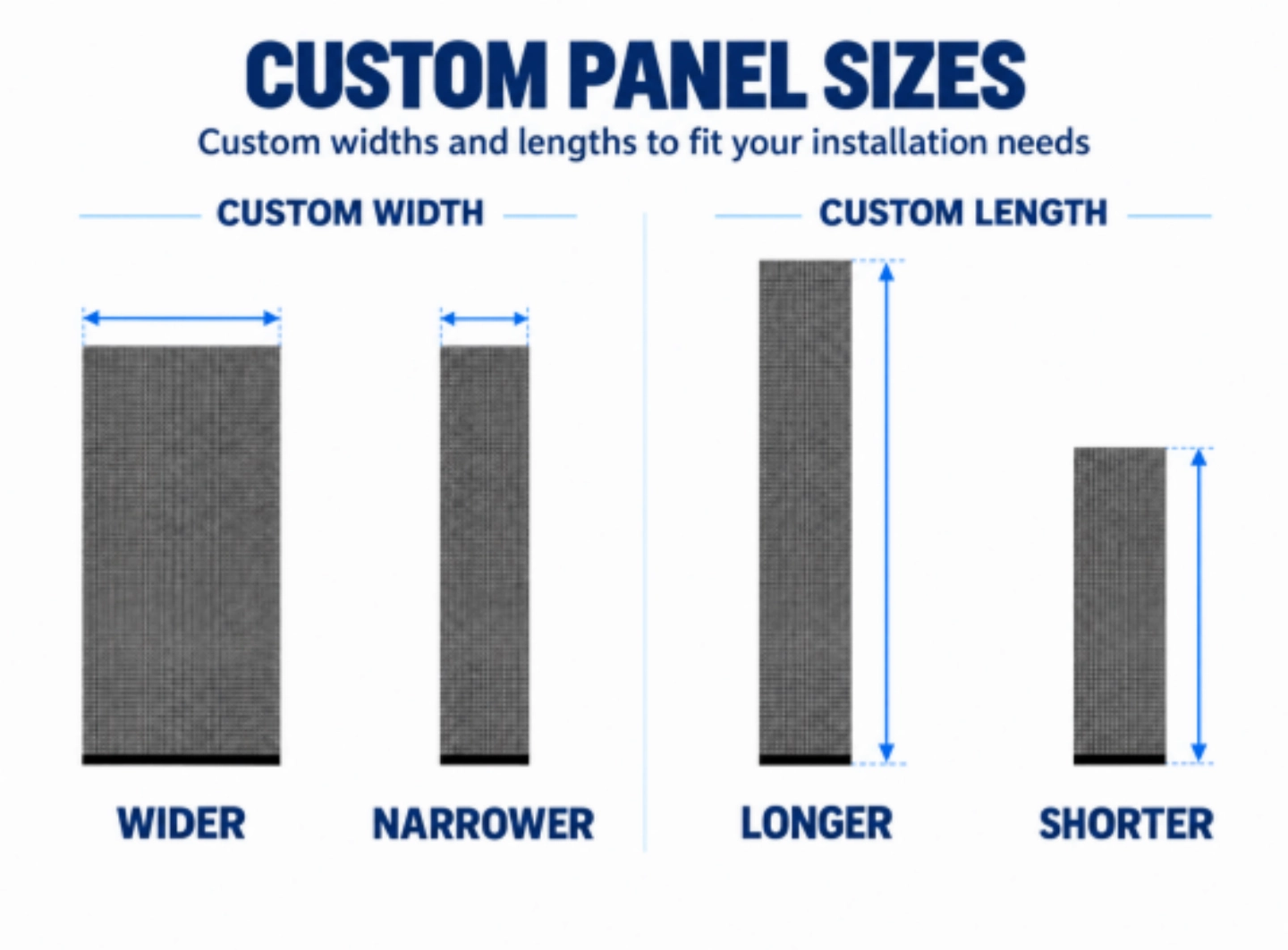

 5th Floor, Building 9, Hengchangrong High-Tech Industrial Park, Bao'an District, Shenzhen 518128, China