Rental LED Screen for Events: Complete Buyer’s Guide
LED screens have become an essential part of concerts, exhibitions, conferences, weddings, churches, and live productions. Compared with traditional projectors or printed backdrops, rental LED screens deliver higher brightness, seamless visuals, flexible installation, and a much stronger visual impact.
However, choosing the right rental LED display is not simply about selecting the highest resolution or the cheapest price. Although the leasing company will offer you a complete solution, for buyers who want to get to know deeply, this guide will provide you with detailed assistance. Different events require different LED wall solutions. A concert stage, trade show booth, corporate conference, and outdoor festival all have completely different requirements for pixel pitch, brightness, cabinet weight, installation method, and viewing distance.
Choosing the wrong LED screen can lead to:
- Poor visual clarity
- Insufficient brightness under stage lighting
- Difficult installation
- Excessive transportation costs
- Camera flickering during live broadcasting
- Reduced audience engagement
This complete buyer’s guide explains how to choose the right rental LED screen for your event based on:
- Event type
- Viewing distance
- Indoor vs outdoor usage
- Pixel pitch
- Refresh rate
- Installation requirements
- Budget considerations
Whether you are planning a concert tour, exhibition, church event, product launch, or corporate presentation, this guide will help you make the right decision.
What Is a Rental LED Screen?
A rental LED screen is a modular LED display system designed for temporary installation at events and live productions. Unlike fixed LED displays, rental LED walls are built for fast assembly, frequent transportation, and repeated setup and dismantling.
Rental LED displays typically feature:
- Lightweight cabinets
- Quick-lock systems
- Hanging and stacking compatibility
- Flight case transportation
- High refresh rates for cameras
- Seamless splicing design
They are widely used for:
- Concert stages
- Touring productions
- Exhibitions and trade shows
- Corporate conferences
- Churches
- Weddings
- Sports events
- Festivals
- Product launches
Modern rental LED screens are designed to balance portability, durability, and visual performance, making them ideal for the fast-paced event industry.
Indoor vs Outdoor Rental LED Screens
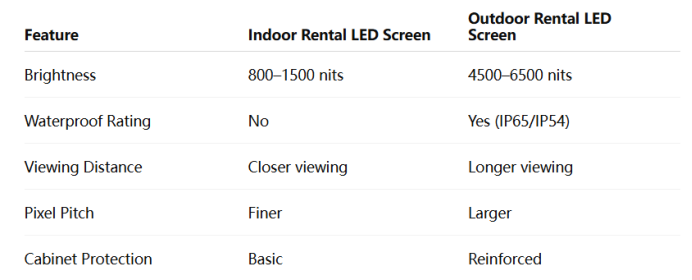
One of the most important decisions is whether your event requires an indoor or outdoor rental LED display. Although they may appear similar, indoor and outdoor LED walls are designed for completely different environments.
Indoor Rental LED Screens
Indoor rental LED walls are designed for close viewing environments where image detail is critical. They usually feature finer pixel pitches such as:
- P2.0
- P2.9
- P3.9
These screens are commonly used for:
- Exhibition booths
- Luxury brand launches
- Wedding stages
Outdoor Rental LED Screens
Outdoor LED displays must withstand:
- Rain
- Dust
- Sunlight
- Wind
As a result, outdoor rental LED walls require:
- Waterproof protection
- Higher brightness
- Stronger cabinet structures
- Better heat dissipation
Outdoor rental screens are widely used for:
- Music festivals
- Outdoor concerts
- Sports events
- Public celebrations
- Large-scale stage productions
For outdoor events during daytime, brightness becomes extremely important. In most cases, 4500–6500 nits is recommended to ensure visibility under sunlight.
How to Choose the Right Pixel Pitch
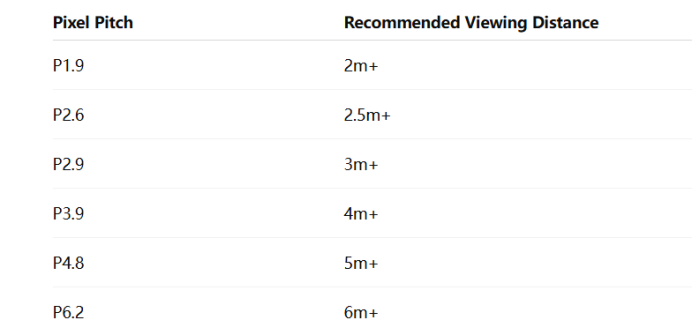
Pixel pitch is one of the most important specifications when selecting a rental LED screen. Pixel pitch refers to the distance between LEDs, measured in millimeters. Smaller pixel pitch means higher resolution and better image clarity at close viewing distances. However, smaller pixel pitch also increases cost. The key is choosing the right balance between viewing distance, screen size, and budget.
LED Screen Viewing Distance Chart

Best Rental LED Screen for Different Event Types
Different event types require different LED wall solutions. Selecting the right setup improves audience experience, installation efficiency, and overall event performance.
Concert LED Screens
Concert stages require LED displays with:
- High refresh rate
- Fast installation
- Touring-friendly cabinets
- Lightweight structure
- Strong hanging systems
Recommended pixel pitch:
- P3.9
- P4.8
Important considerations:
- Camera compatibility
- Rigging safety
- Transportation efficiency
- Fast setup during touring schedules
For large music festivals and live productions, lightweight cabinets can significantly reduce installation labor and transportation costs.
Exhibition LED Displays
Trade shows and exhibitions usually involve close viewing distances.
Important factors include:
- Fine pixel pitch
- High visual impact
- Lightweight structure
- Fast installation
- Flexible shapes
Recommended pixel pitch:
- P2.9
Curved or creative LED walls are increasingly popular in exhibition environments because they attract more visitor attention compared with traditional flat displays.
Church LED Screens
Church LED displays require:
- Comfortable viewing
- Camera-friendly refresh rate
- Stable performance
- Clear lyrics and presentations
Recommended pixel pitch:
- P2.9
- P3.9
Many churches prefer rental LED systems for seasonal events, conferences, and worship productions because of their flexibility and scalability.
Wedding LED Screens
Wedding stages prioritize aesthetics and immersive visuals.
Important factors include:
- Elegant appearance
- Flexible setup
- Compact stage compatibility
- Easy installation
Recommended pixel pitch:
- P2.9
Curved LED walls and creative stage designs are becoming increasingly popular for luxury weddings and event venues.
Corporate Conference LED Walls
Corporate presentations require:
- High-definition visuals
- Clear text display
- Professional appearance
- Camera compatibility
Recommended pixel pitch:
- P2.0
- P2.9
Fine-pitch LED walls help improve presentation clarity and audience engagement during conferences and product launches.
LED Wall Installation & Rigging Considerations
Many buyers focus only on resolution and brightness while ignoring installation requirements. In reality, installation efficiency is critical for rental applications.
Hanging vs Stacking
Hanging Installation
Advantages:
- Better stage visibility
- Cleaner stage layout
- Ideal for concerts and touring
Requires:
- Truss system
- Rigging hardware
- Structural safety calculations
Ground Stacking
Advantages:
- Faster setup
- Lower rigging complexity
- Suitable for exhibitions and conferences
Often used when venue rigging limitations exist.
Cabinet Weight Matters
Lightweight cabinets reduce:
- Transportation costs
- Installation labor
- Rigging load
For touring productions, lightweight rental LED cabinets can dramatically improve operational efficiency, such as InVisia Vitra Series helping event teams reduce setup time while improving touring efficiency. Vitra Series supports both hanging and ground stacking installations, making it suitable for concerts, festivals, churches, and large-scale live events.
Flight Case Transportation
Professional touring events often require:
- Flight cases
- Shock protection
- Fast loading systems
Efficient transportation design becomes especially important for large concert tours and live productions.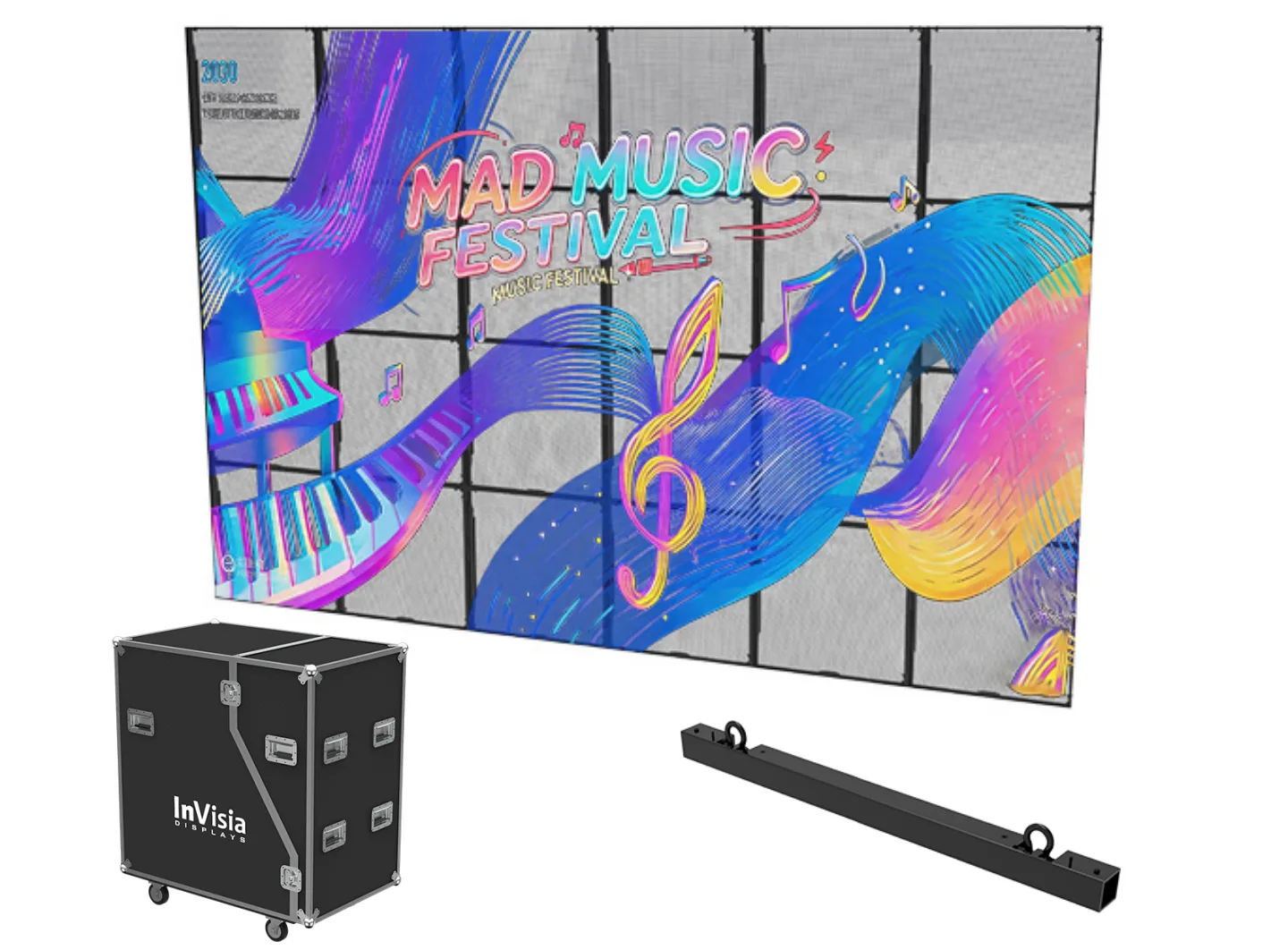
Common Mistakes When Choosing Rental LED Screens
Choosing Based Only on Price
Lower-cost LED walls may compromise:
- Brightness
- Refresh rate
- Cabinet quality
- Reliability
The cheapest option is not always the most cost-effective.
Ignoring Viewing Distance
Using overly fine pixel pitch for long-distance viewing unnecessarily increases cost.
Conversely, large pixel pitch at close viewing distances reduces image quality.
Using Indoor Screens Outdoors
Indoor LED screens are not waterproof and may fail under outdoor conditions.
Always confirm environmental requirements before installation.
Ignoring Refresh Rate
Low refresh rates can cause flickering during photography and live broadcasting.
For professional events, a high refresh rate is strongly recommended.
How Much Does a Rental LED Screen Cost?
Rental LED screen pricing depends on multiple factors, including:
- Pixel pitch
- Screen size
- Brightness
- Refresh rate
- Cabinet material
- Indoor or outdoor usage
- Installation method
- Curved or creative designs
Generally:
- Fine-pitch LED screens cost more
- Outdoor screens cost more than indoor models
- Lightweight touring cabinets increase pricing
- High refresh rate systems command premium pricing
Instead of selecting purely by price, buyers should evaluate total event requirements and operational efficiency.
Rental LED Screens Are Replacing Traditional Projection
Compared with projectors, rental LED displays offer:
- Higher brightness
- Better visibility under stage lighting
- Seamless large-screen visuals
- Flexible stage integration
- Faster installation
- Better audience engagement
As live events continue evolving toward immersive visual experiences, LED walls have become the preferred solution for modern event production.

 5th Floor, Building 9, Hengchangrong High-Tech Industrial Park, Bao'an District, Shenzhen 518128, China