Lumen vs. Lux vs. Nits: Common Mistakes in LED Displays
Brightness specifications in LED industry often create confusion. Terms like Lumen, Lux, Candela, and Nits are often used interchangeably — but they actually describe very different things.
What Are Lumen, Lux, Candela, and Nits?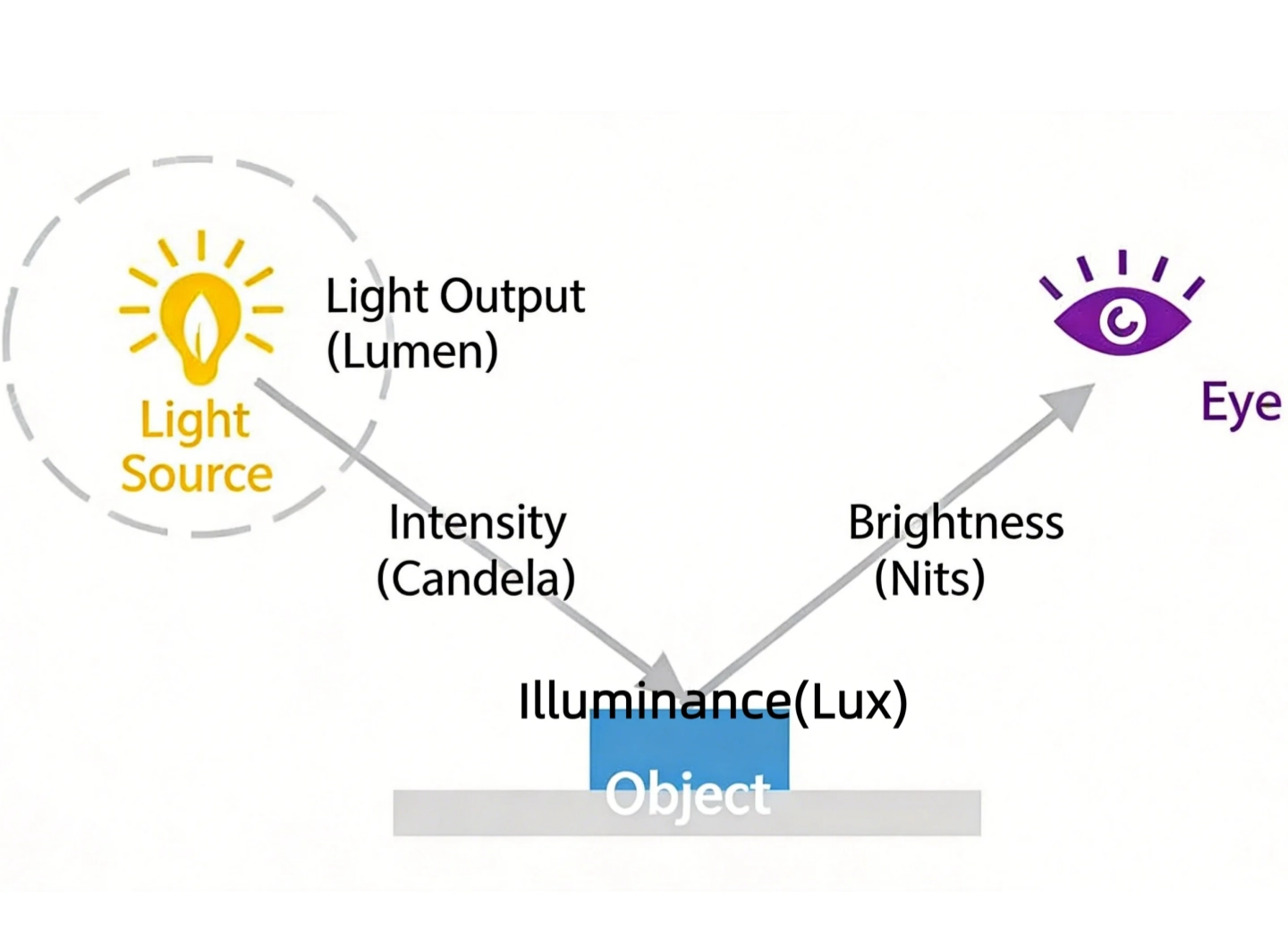
Lumen (lm) — Total Light Output
Lumen measures the total amount of visible light emitted by a light source in all directions. In simple terms, lumen describes the overall “light-producing ability” of a source. The higher the lumen value, the more total light the device produces. However, lumen alone does not determine how bright a display appears to viewers.
Candela (cd) — Light Intensity in a Specific Direction
Candela measures the intensity of light emitted in a particular direction. Unlike lumen, which measures total light output, candela focuses on concentrated directional brightness. Higher candela values mean stronger brightness in a targeted viewing angle.
Lux (lx) — Illuminance on a Surface
Lux measures the amount of light falling onto a surface per square meter. It represents how much light is received by an object or environment.
Nits (cd/m²) — Display Brightness
Nits measure the brightness emitted or reflected from a display surface.
1 Nit=1 Candela/m²
For LED displays, nits are the industry-standard brightness measurement because they directly determine screen visibility.
When people evaluate a display, they usually ask:
- Can the content be seen clearly?
- Does the image remain visible under sunlight?
- Is the screen washed out behind glass?
- Does the display remain vivid during daytime?
All of these questions are related to nits.
Why Brightness Matters in LED Display Projects
Brightness directly affects:
- Visibility under sunlight
- Image clarity
- Viewing distance
- Color performance
- Advertising impact
- Power consumption
- User experience
A display that looks stunning indoors may become completely invisible under direct sunlight if the brightness level is insufficient.
What Brightness Level Do You Need?
An indoor conference room LED wall may only require 600–1000 nits
A shopping mall window display may need 3000–5000 nits
Outdoor LED billboards can exceed 6000 nits
For LED displays, nits are the industry-standard measurement. That is because users care about:
- Can the content be seen clearly?
- Is the image washed out under sunlight?
- Does the screen remain vibrant through glass?
- Is the display bright enough during daytime?
These questions are all related to nits.
Questions to Ask Before Choosing Brightness
Before selecting an LED display, ask:
- Is the installation indoor or outdoor?
- Will direct sunlight hit the screen?
- Is the display behind glass?
- What is the viewing distance?
- What are the operating hours?
- Is energy efficiency important?
- Will the content mainly be video or static advertising?
These factors help determine the optimal nit level.
Common Misunderstandings About Display Brightness
“Higher Nits Always Mean Better Quality”
- False. Brightness alone does not determine image quality. Contrast ratio, grayscale, refresh rate, color calibration, and heat management are equally important.
“Indoor Displays Need Extremely High Brightness”
- False. Overly bright indoor displays can become uncomfortable for viewers.
“Higher Brightness Always Mean Better”
- Not necessarily. Excessive brightness can cause:
- Higher power consumption
- Increased heat generation
- Eye discomfort
- Faster LED aging
- Reduced grayscale performance
The goal is not maximum brightness — it is appropriate brightness for the environment.
“Transparent LED Screens Need the Same Brightness as Traditional LED Screens”
- False. Transparent LED displays often require higher nit values than traditional LED screens because:
- Ambient light passes through the screen
- Glass reflects sunlight
- Transparency reduces perceived brightness
- Daytime viewing conditions are more demanding
That is why premium transparent LED displays focus heavily on:
- High brightness
- High contrast ratio
- Black face LEDs
- Efficient heat dissipation
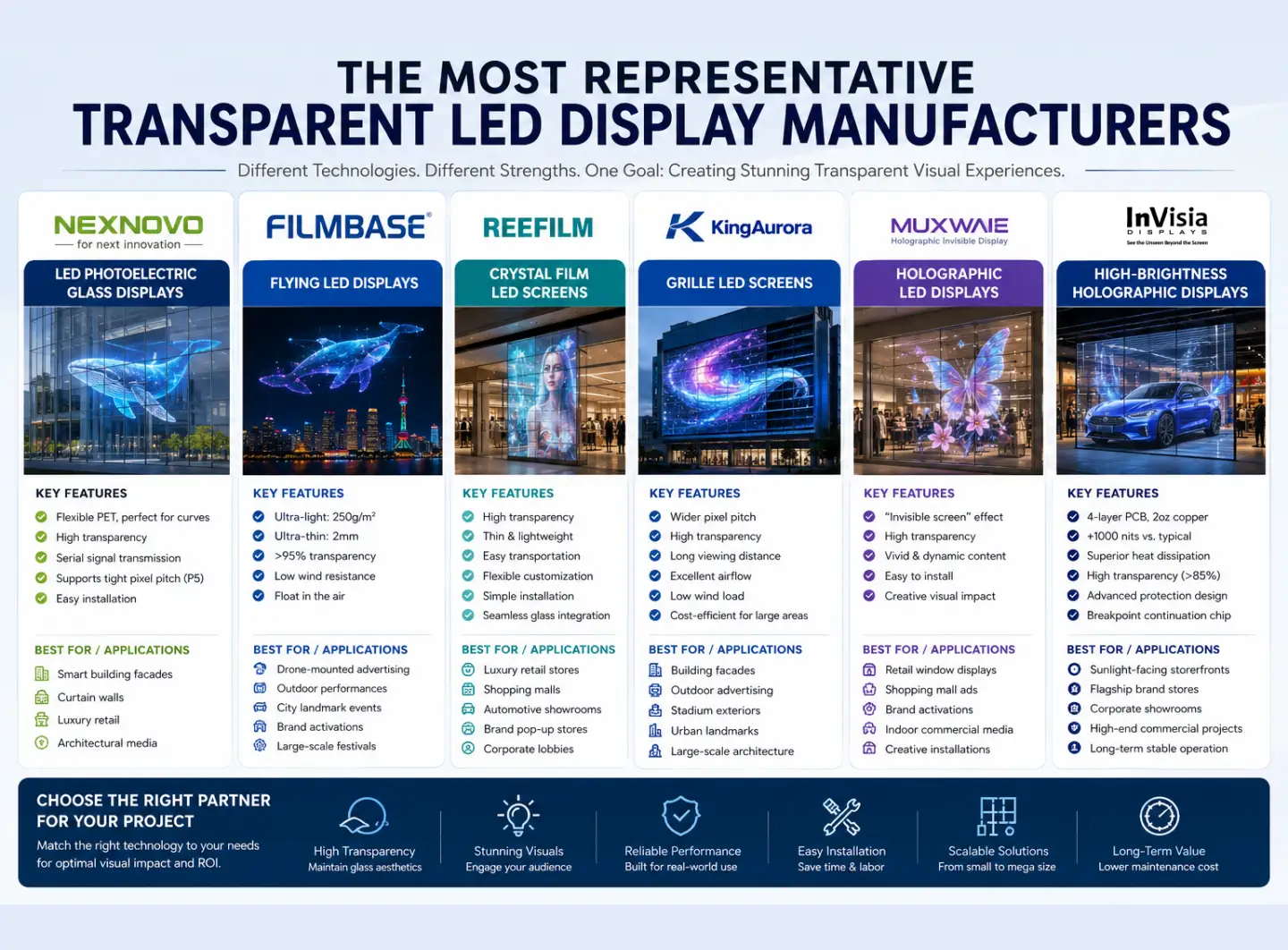
Premium transparent LED display manufacturers like InVisia Displays, focus on delivering high-brightness, high-contrast display solutions designed for demanding commercial environments and daylight visibility.

 5th Floor, Building 9, Hengchangrong High-Tech Industrial Park, Bao'an District, Shenzhen 518128, China