
LED Screen Driving IC
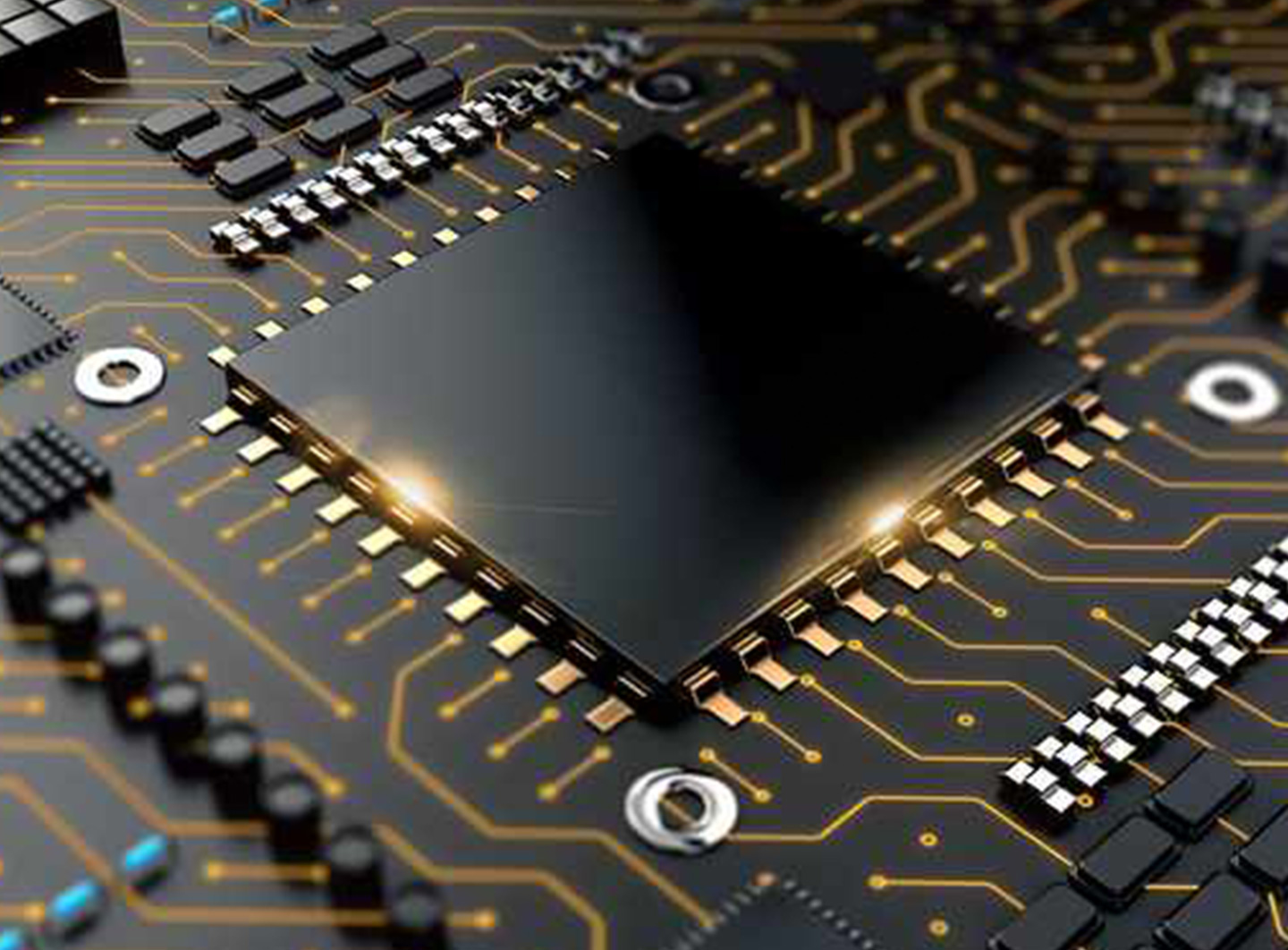
Behind every high-performance LED display, there is a critical yet often overlooked component in the background—the LED display driver IC (Integrated Circuit). Often described as the “brain” of an LED screen, the driver IC precisely controls every pixel’s behavior, ensuring stable, efficient, and visually stunning performance.
Without advanced driver ICs, today’s high-resolution, high-refresh-rate LED displays simply wouldn’t be possible.
What Is an LED Display Driver IC?
An LED display driver IC is a compact but powerful semiconductor chip responsible for controlling the operation of individual LED pixels. Its core functions include:
- Processing incoming image and video data
- Regulating pixel brightness and grayscale levels
- Delivering uniform and accurate visual output
Acting as a bridge between the control system and the LED panel, the driver IC translates digital signals into precise electrical currents that drive each LED. Images, graphics, and videos are therefore displayed accurately, efficiently, and consistently across the entire screen.
Why Are Driver ICs So Important in LED Displays?
The performance of an LED display depends heavily on the quality of its driver ICs. From image quality to long-term reliability, driver ICs play a decisive role.
Precise Pixel Control & Brightness Management
Advanced driver ICs can individually regulate each pixel’s output, adjusting brightness levels with extreme precision. This ensures consistent color uniformity and smooth visual transitions, resulting in natural, harmonious images across the display.
Improved Display Reliability and LED Lifespan
Driver ICs provide stable constant current output to LED chips. Even minor current fluctuations can cause flickering, brightness degradation, or premature LED failure. By maintaining consistent current, driver ICs significantly extend the lifespan of LED displays.
Support for High Refresh Rates
Low refresh rates often result in flickering, motion blur, and image distortion—especially in fast-moving content. High-performance driver ICs enable high refresh rates, ensuring smooth motion, reduced ghosting, and superior viewing comfort.
Enhanced Color Depth and Grayscale Accuracy
Modern driver ICs support high grayscale levels (commonly 16-bit or higher), allowing LED displays to render richer colors, finer gradients, and more detailed visuals—critical for premium commercial and broadcast applications.
Types of LED Display Driver ICs
Based on functionality, technology, and application, LED display driver ICs can be categorized into several main types:
General-Purpose Driver ICs
These ICs are not specifically designed for LED displays and typically offer only basic driving functions.
- Suitable for simple applications such as monochrome displays or status indicators
- Limited driving current and functionality
- Lack advanced features like constant current control or high refresh rates
- Mainly used in low-cost or low-performance LED products
Constant Current Driver ICs
Constant current driver ICs are the backbone of high-quality LED displays.
- Maintain uniform current despite voltage fluctuations
- Improve brightness consistency and reduce flicker
- Support high refresh rates and precise grayscale control
- Commonly used in indoor and outdoor full-color LED displays and high-end digital signage
Their ability to stabilize current output greatly reduces pixel damage and ensures long-term reliability.
PWM-Based Driver ICs
These driver ICs use Pulse Width Modulation (PWM) technology to finely control LED brightness.
- Enable multi-level brightness control (8-bit, 16-bit, or higher)
- Deliver smoother brightness transitions and superior color performance
- Reduce motion blur in dynamic images
- Ideal for high-definition LED displays requiring accurate grayscale and color depth
LED Display Refresh Rate: Definition and Importance
The refresh rate refers to how many times per second an LED display updates its image, measured in Hertz (Hz).
For example, a 1920Hz refresh rate means the display refreshes 1,920 times per second.
Why High Refresh Rate Matters:
- Smoother motion and seamless image transitions
- Reduced flicker and eye fatigue during prolonged viewing
- Improved performance when filmed by cameras (less scan lines)
Most standard LED displays operate between 480Hz and 1920Hz, while high-end LED displays can exceed 3840Hz. In practical use, low-refresh-rate displays often show moiré pattern when captured on smartphones, whereas high-refresh-rate displays remain clean and stable.
Applications such as live broadcasting, sports events, concerts, and virtual production demand high refresh rates to ensure flicker-free visuals and camera compatibility.
The Direct Relationship Between Driver ICs and Refresh Rate
The driver IC is a key determinant of an LED display’s refresh rate.
- Advanced PWM-based driver ICs can support refresh rates of 3840Hz or higher
- Basic or general-purpose driver ICs are typically limited to lower refresh rates
By controlling how quickly each pixel updates, the driver IC directly defines the display’s refresh performance. High-end driver ICs deliver smooth, flicker-free images, while entry-level ICs are more suitable for less demanding visual applications.
Key Trends in LED Display Driver IC Technology
Energy Efficiency
Energy saving is a permanent goal in LED display development. Driver IC efficiency improvements mainly focus on:
- Reducing the constant current “knee voltage,” allowing power supply voltage to drop from 5V to below 3.8V
- Optimizing IC algorithms and circuit design to lower operating voltage and current
Some advanced constant current driver ICs now achieve ultra-low knee voltages as low as 0.2V, increasing LED utilization efficiency by over 15% and reducing power consumption by up to 16%. This significantly lowers heat generation and enhances overall display energy efficiency.
Higher Integration
As LED pixel pitch continues to shrink—especially in transparent and fine-pitch LED displays—the number of components per unit area increases exponentially. This leads to:
- Higher PCB component density
- Increased design complexity
- Greater risk of soldering defects and reduced module reliability
Market demand is pushing driver ICs toward higher integration, enabling fewer ICs per module, larger PCB routing space, and improved reliability—essential for next-generation LED display solutions.
Final Thoughts
From brightness uniformity and color accuracy to refresh rate and energy efficiency, LED display driver ICs are fundamental to display performance. As LED technology continues to evolve toward higher resolution, transparency, and efficiency, driver IC innovation will remain a critical driving force behind the future of LED displays.
 https://invisiadisplays.com/wp-content/uploads/2026/03/LED-China-ISLE-2026-1.jpg
1062
1440
administrator
https://invisiadisplays.com/wp-content/uploads/2025/04/logo22-1.png
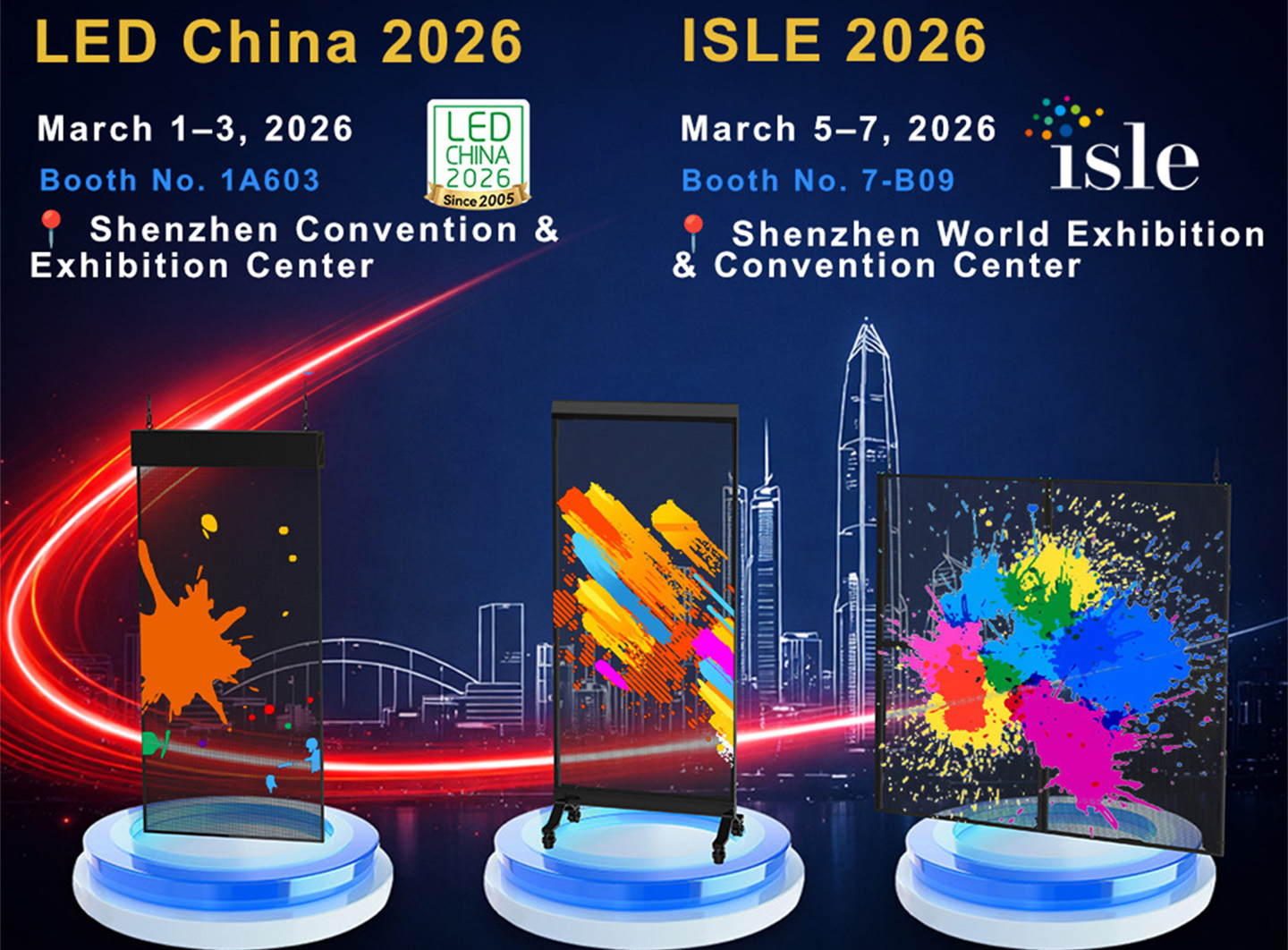
administrator2026-03-02 01:21:352026-03-02 02:09:21InVisia at LED China & ISLE 2026
https://invisiadisplays.com/wp-content/uploads/2026/03/LED-China-ISLE-2026-1.jpg
1062
1440
administrator
https://invisiadisplays.com/wp-content/uploads/2025/04/logo22-1.png
administrator2026-03-02 01:21:352026-03-02 02:09:21InVisia at LED China & ISLE 2026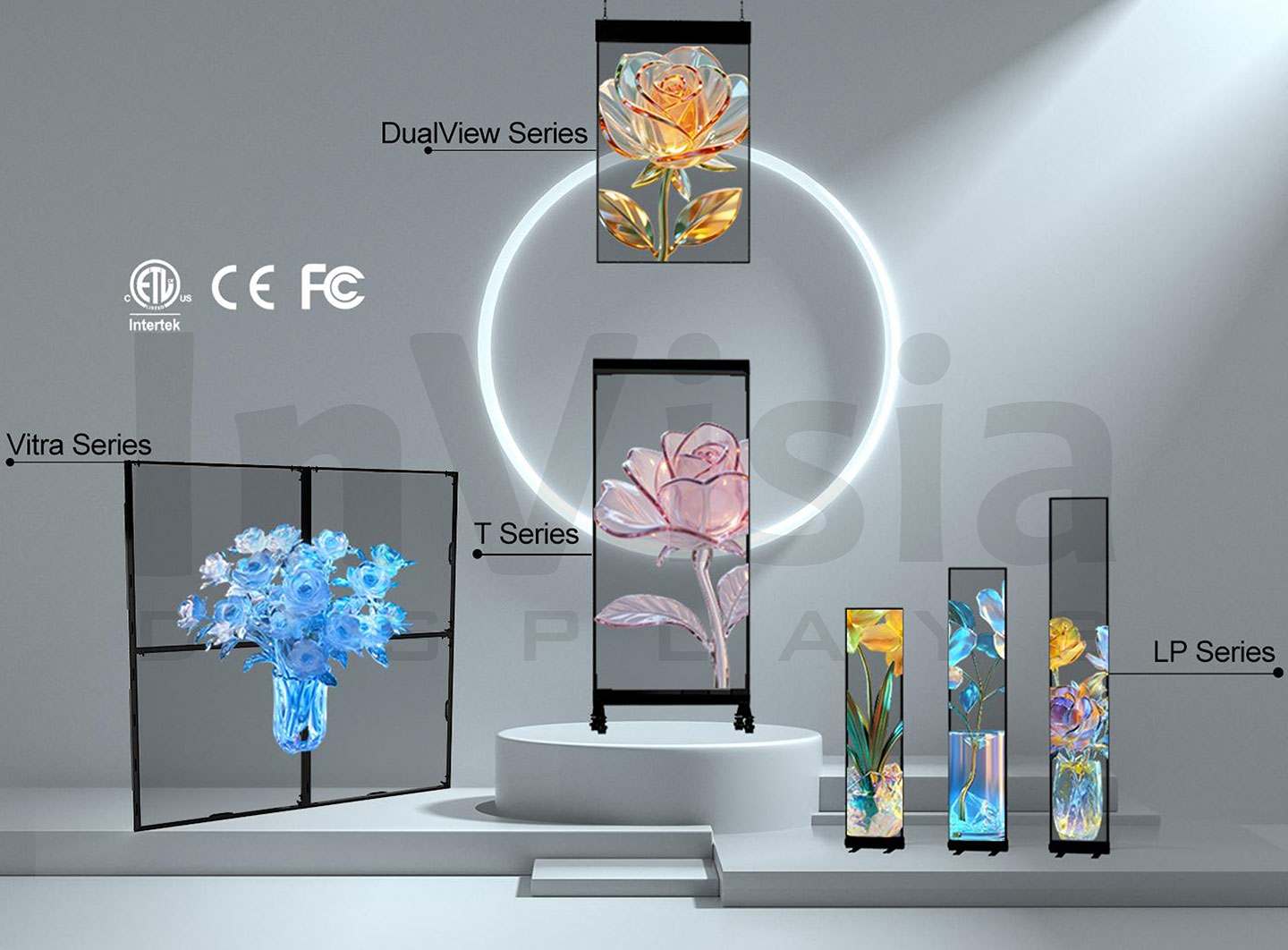 https://invisiadisplays.com/wp-content/uploads/2026/01/InVisia-Holographic-Displays-CE-FCC-ETL.jpg
1062
1440
administrator
https://invisiadisplays.com/wp-content/uploads/2025/04/logo22-1.png
administrator2026-02-20 12:48:472026-02-06 06:50:58A Complete Guide to InVisia Holographic Screen
https://invisiadisplays.com/wp-content/uploads/2026/01/InVisia-Holographic-Displays-CE-FCC-ETL.jpg
1062
1440
administrator
https://invisiadisplays.com/wp-content/uploads/2025/04/logo22-1.png
administrator2026-02-20 12:48:472026-02-06 06:50:58A Complete Guide to InVisia Holographic Screen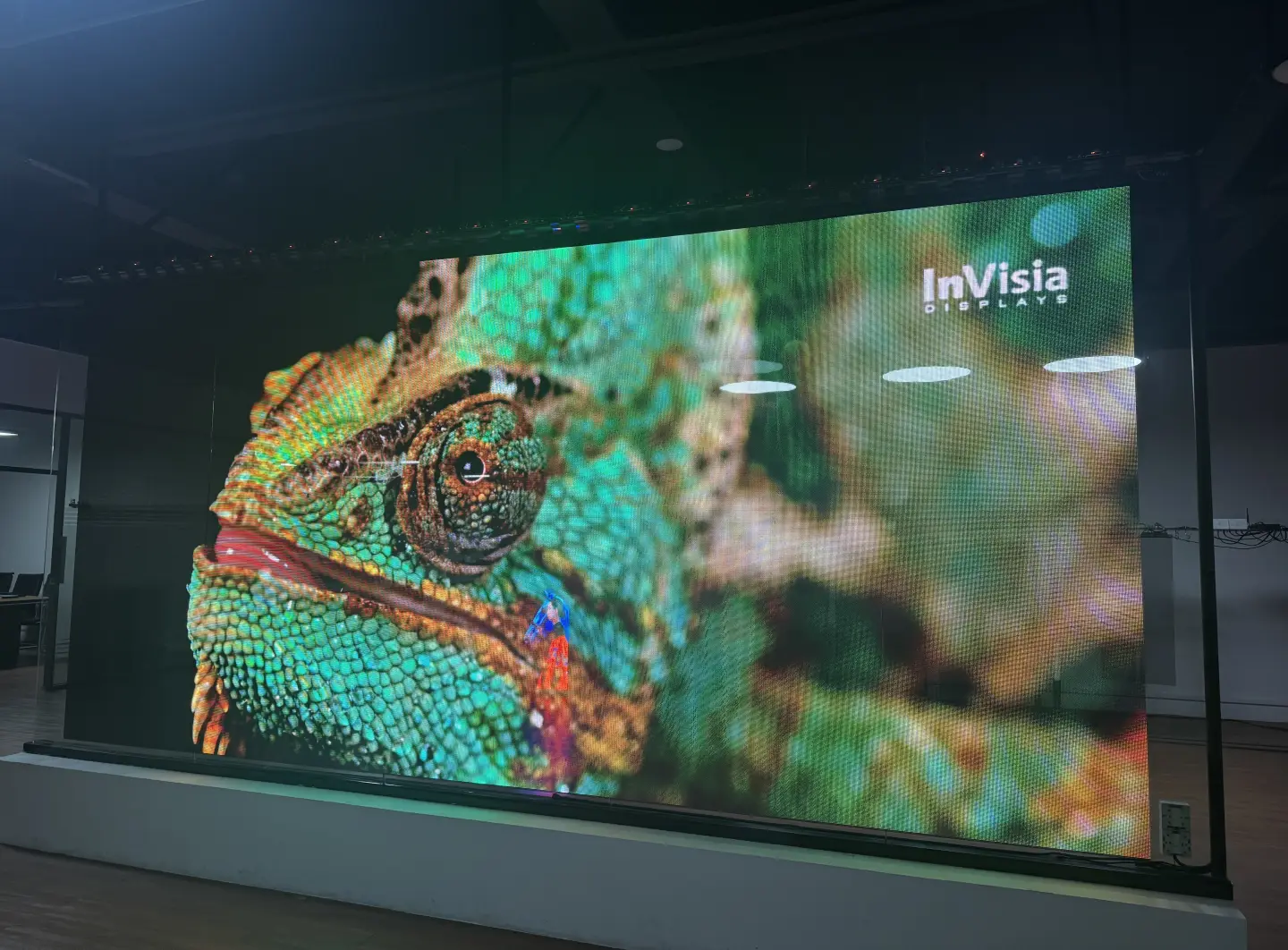 https://invisiadisplays.com/wp-content/uploads/2026/02/InVisia-showroom-mesh-LED-screen-upgrade.webp
1062
1440
administrator
https://invisiadisplays.com/wp-content/uploads/2025/04/logo22-1.png
administrator2026-02-13 14:47:012026-02-06 03:39:39InVisia Showroom Upgrades Holographic LED Display
https://invisiadisplays.com/wp-content/uploads/2026/02/InVisia-showroom-mesh-LED-screen-upgrade.webp
1062
1440
administrator
https://invisiadisplays.com/wp-content/uploads/2025/04/logo22-1.png
administrator2026-02-13 14:47:012026-02-06 03:39:39InVisia Showroom Upgrades Holographic LED Display https://invisiadisplays.com/wp-content/uploads/2026/02/InVisia-at-ISE-2026.webp
1062
1440
administrator
https://invisiadisplays.com/wp-content/uploads/2025/04/logo22-1.png
administrator2026-02-05 03:00:152026-02-05 03:27:10InVisia Live at ISE 2026: Strong Interest in Holographic LED Banners
https://invisiadisplays.com/wp-content/uploads/2026/02/InVisia-at-ISE-2026.webp
1062
1440
administrator
https://invisiadisplays.com/wp-content/uploads/2025/04/logo22-1.png
administrator2026-02-05 03:00:152026-02-05 03:27:10InVisia Live at ISE 2026: Strong Interest in Holographic LED Banners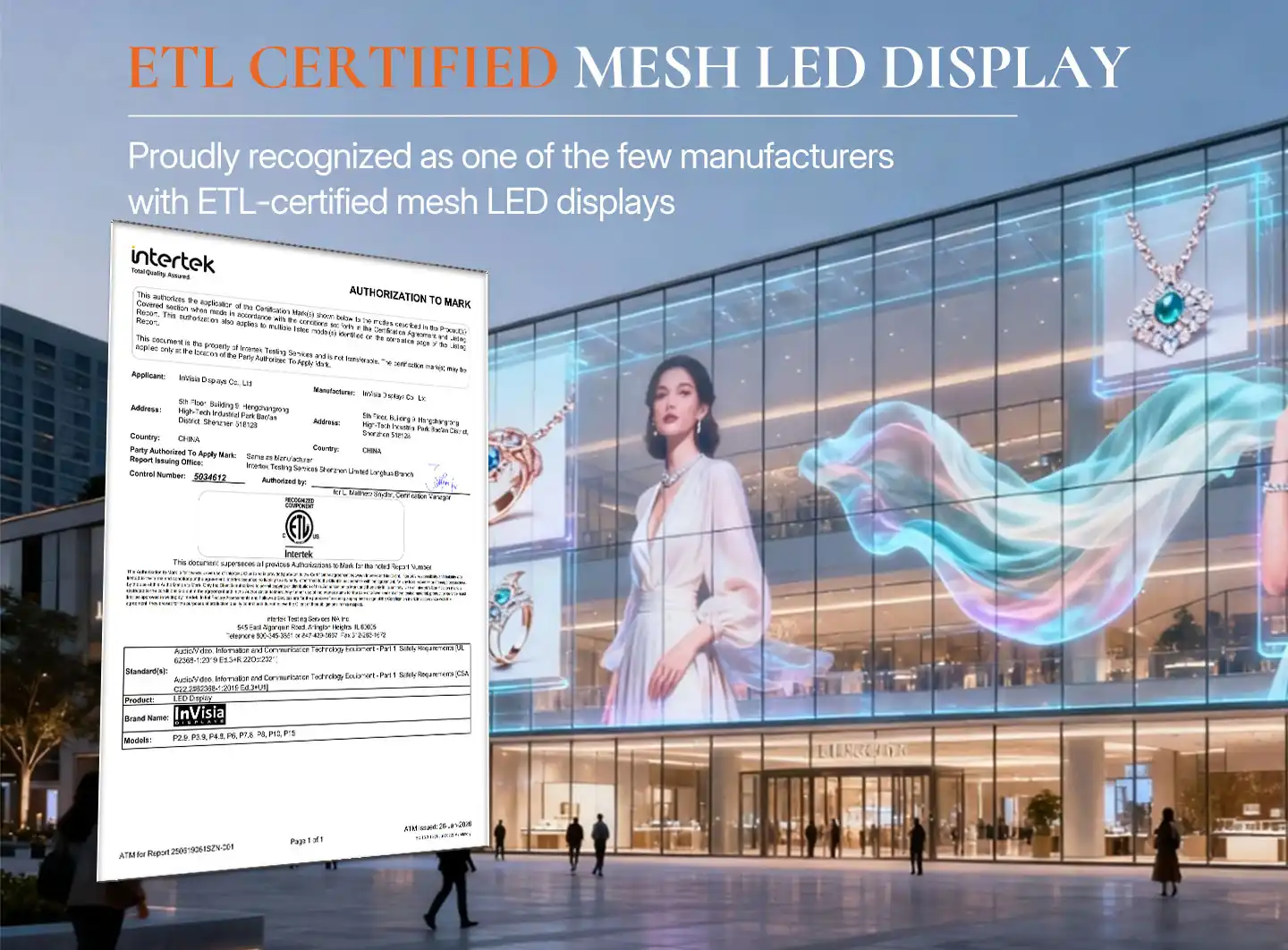 https://invisiadisplays.com/wp-content/uploads/2026/01/InVisia-ETL-certified-mesh-LED-display.webp
1062
1440
administrator
https://invisiadisplays.com/wp-content/uploads/2025/04/logo22-1.png
administrator2026-01-29 08:41:522026-01-30 06:48:26InVisia Holographic LED Displays Achieve ETL Certification
https://invisiadisplays.com/wp-content/uploads/2026/01/InVisia-ETL-certified-mesh-LED-display.webp
1062
1440
administrator
https://invisiadisplays.com/wp-content/uploads/2025/04/logo22-1.png
administrator2026-01-29 08:41:522026-01-30 06:48:26InVisia Holographic LED Displays Achieve ETL Certification https://invisiadisplays.com/wp-content/uploads/2026/01/InVisia-Displays-ISE-2026.jpg
1062
1440
administrator
https://invisiadisplays.com/wp-content/uploads/2025/04/logo22-1.png
administrator2026-01-23 06:19:282026-01-23 06:42:02InVisia Displays to Exhibit at ISE Barcelona 2026
https://invisiadisplays.com/wp-content/uploads/2026/01/InVisia-Displays-ISE-2026.jpg
1062
1440
administrator
https://invisiadisplays.com/wp-content/uploads/2025/04/logo22-1.png
administrator2026-01-23 06:19:282026-01-23 06:42:02InVisia Displays to Exhibit at ISE Barcelona 2026 https://invisiadisplays.com/wp-content/uploads/2026/01/InVisia-holographic-LED-rental-displays.jpg
1062
1440
administrator
https://invisiadisplays.com/wp-content/uploads/2025/04/logo22-1.png
administrator2026-01-22 03:33:242026-01-22 07:01:55InVisia New-Generation Holographic Rental LED Display
https://invisiadisplays.com/wp-content/uploads/2026/01/InVisia-holographic-LED-rental-displays.jpg
1062
1440
administrator
https://invisiadisplays.com/wp-content/uploads/2025/04/logo22-1.png
administrator2026-01-22 03:33:242026-01-22 07:01:55InVisia New-Generation Holographic Rental LED Display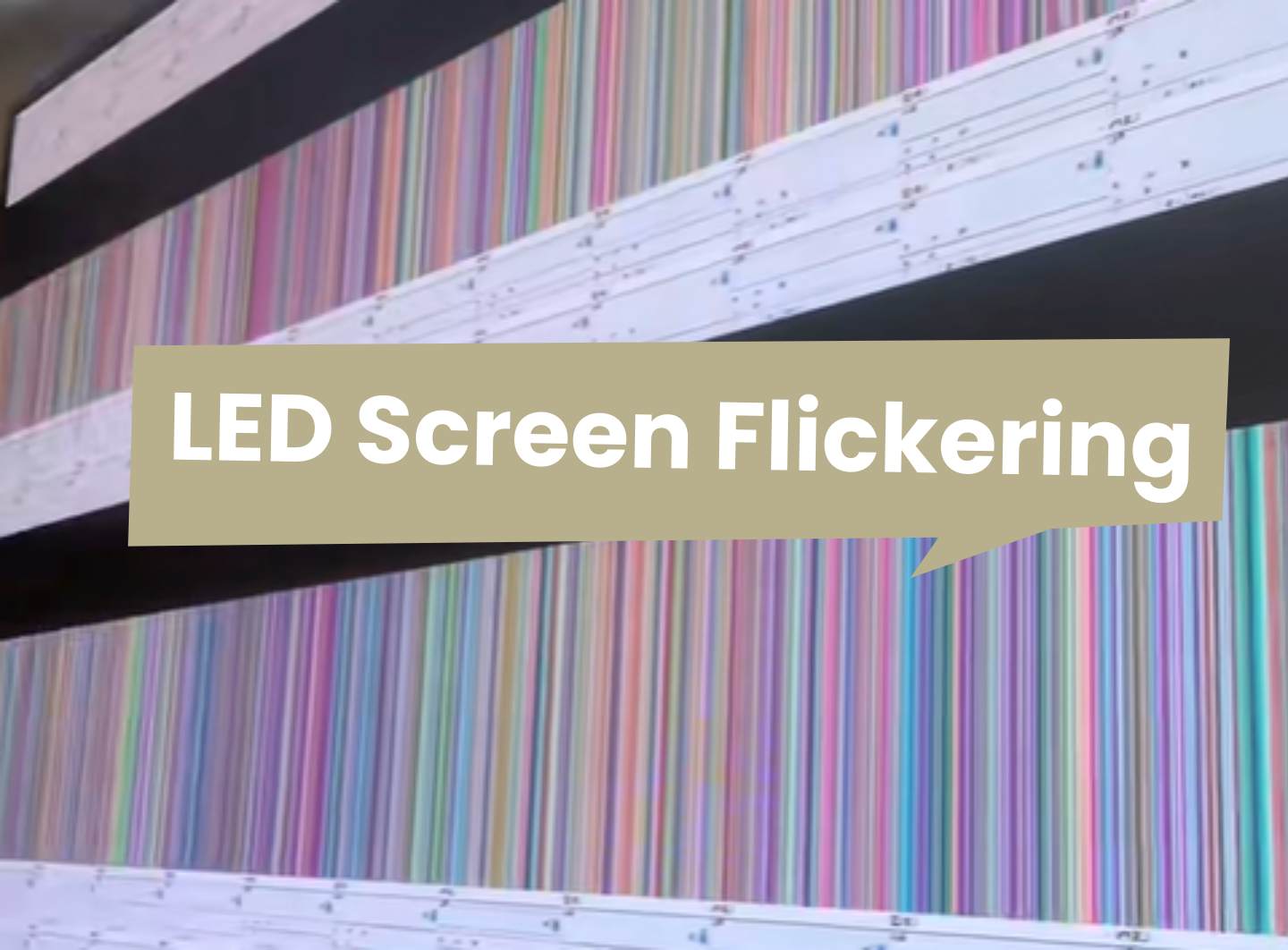 https://invisiadisplays.com/wp-content/uploads/2026/01/LED-Screen-Flickering.jpg
1062
1440
administrator
https://invisiadisplays.com/wp-content/uploads/2025/04/logo22-1.png
administrator2026-01-14 06:29:442026-01-19 01:56:55LED Screen Flickering: Causes and Troubleshooting
https://invisiadisplays.com/wp-content/uploads/2026/01/LED-Screen-Flickering.jpg
1062
1440
administrator
https://invisiadisplays.com/wp-content/uploads/2025/04/logo22-1.png
administrator2026-01-14 06:29:442026-01-19 01:56:55LED Screen Flickering: Causes and Troubleshooting https://invisiadisplays.com/wp-content/uploads/2026/01/holographic-LED-screens-glass-mount.jpg
1062
1440
administrator
https://invisiadisplays.com/wp-content/uploads/2025/04/logo22-1.png
administrator2026-01-09 10:26:392026-01-09 10:28:13Three Glass-Mounting Methods for Holographic LED Displays
https://invisiadisplays.com/wp-content/uploads/2026/01/holographic-LED-screens-glass-mount.jpg
1062
1440
administrator
https://invisiadisplays.com/wp-content/uploads/2025/04/logo22-1.png
administrator2026-01-09 10:26:392026-01-09 10:28:13Three Glass-Mounting Methods for Holographic LED Displays
 5th Floor, Building 9, Hengchangrong High-Tech Industrial Park, Bao'an District, Shenzhen 518128, China

